

Sales Schedule


Highlights of Upcoming Auctions
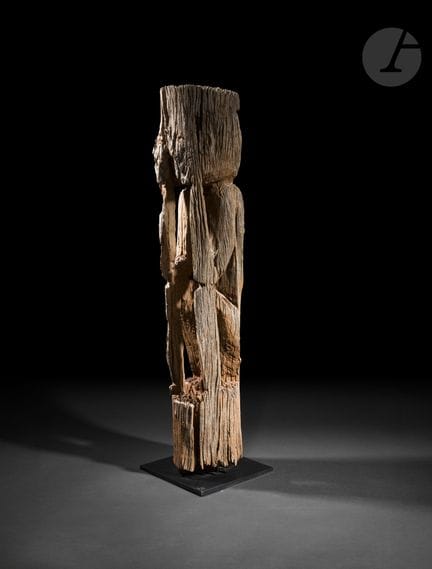
96 - Large funerary statue, Jarai, Vietnam Height: 111 cm Wood. Jarai funerary sculptures are among the most significant artistic traditions of the Vietnamese Highlands. Erected around graves, they played a role in funeral ceremonies designed to accompany the deceased to the world of the ancestors and to mark the definitive separation between the living and the dead. Their artistic vocabulary, based on the simplification of forms and the power of the silhouette, prioritizes expression over description. With its monumental dimensions, balanced composition, and high-quality carving, this figure exemplifies the mastery of the Jarai artists, whose works rank among the most striking expressions of tribal art in Southeast Asia.
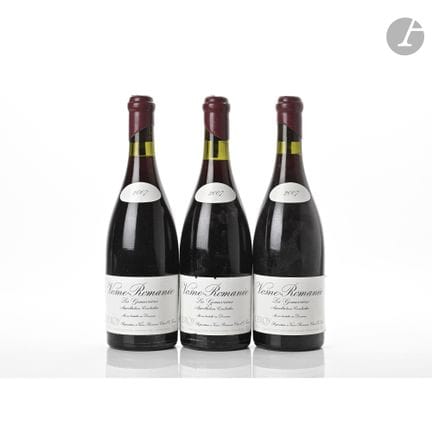
851 - 3 B VOSNE-ROMANEE LES GENAIVRIERES (1 to 2.5 cm; 1 bottle, among others; No. 2231; No. 2332 and No. 2233, with slightly damaged labels; 3,036 bottles harvested), Domaine Leroy, 2007
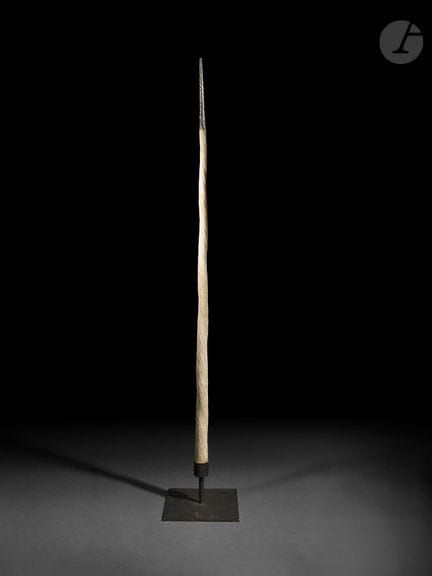
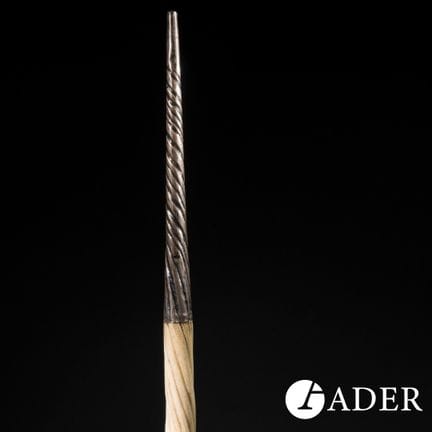
22 - Narwhal tooth or rostrum (Monodon monoceros) Small in size, with a beautiful antique patina that clearly reveals the striations on the surface of the tusk. The upper part of the object is covered with a silver plate (heavily patinated) that perfectly follows the shape (including the details of the striations). English work, mid-19th century. Total height: 181 cm; gross weight (with base): 11 kg The tusk is intact and mounted on a modern black-lacquered iron base. A few small cracks and fissures are present, attesting to the object’s age. The narwhal is a marine mammal found in the Arctic. It owes its fame to its two tusks: the right one (which rarely breaks through the gum and is often invisible) and the left one (which takes the form of a helical tusk that can reach up to 270 cm in length). In the Middle Ages, this tooth or rostrum was considered a unicorn’s “horn”—a symbol of virginity and purity. Because of the magical and therapeutic powers attributed to this tooth, its value was equivalent to that of gold. Emperor Charles V settled a huge debt he owed to the Margrave of Bayreuth by giving him two narwhal “horns.” Classification II/A under the CITES (Washington Convention) codes and European Union Regulation 338/97 of December 9, 1996. CIC issued on October 21, 2026. For export outside the EU, a re-export document will be required and must be obtained at the buyer’s expense.
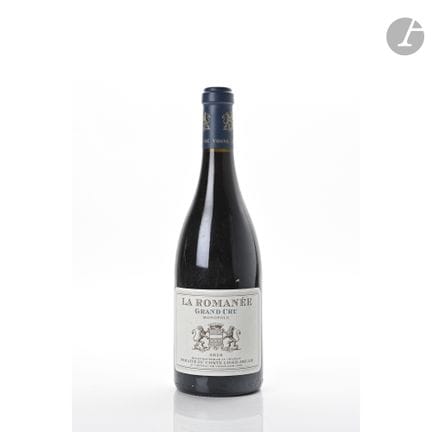
255 - 1 B LA ROMANEE (Grand Cru) (No. 2737; back label slightly damaged; 3,442 bottles produced), Domaine du Comte Liger-Belair, 2010
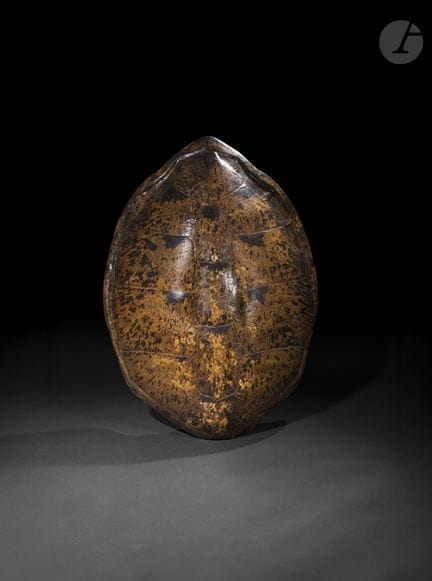
14 - Upper portion of a green sea turtle (Chelonia mydas) carapace Large, unprocessed carapace. Dated to the late 19th century. 86 x 60 cm Includes a wall-mounting system. Classification I/A under the CITES (Washington Convention) codes and European Union Regulation 338/97 of December 9, 1996. CIC issued on October 21, 2026. For export outside the EU, a re-export document will be required and must be obtained at the buyer’s expense.
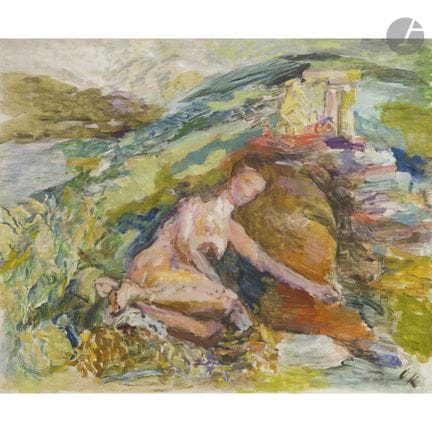
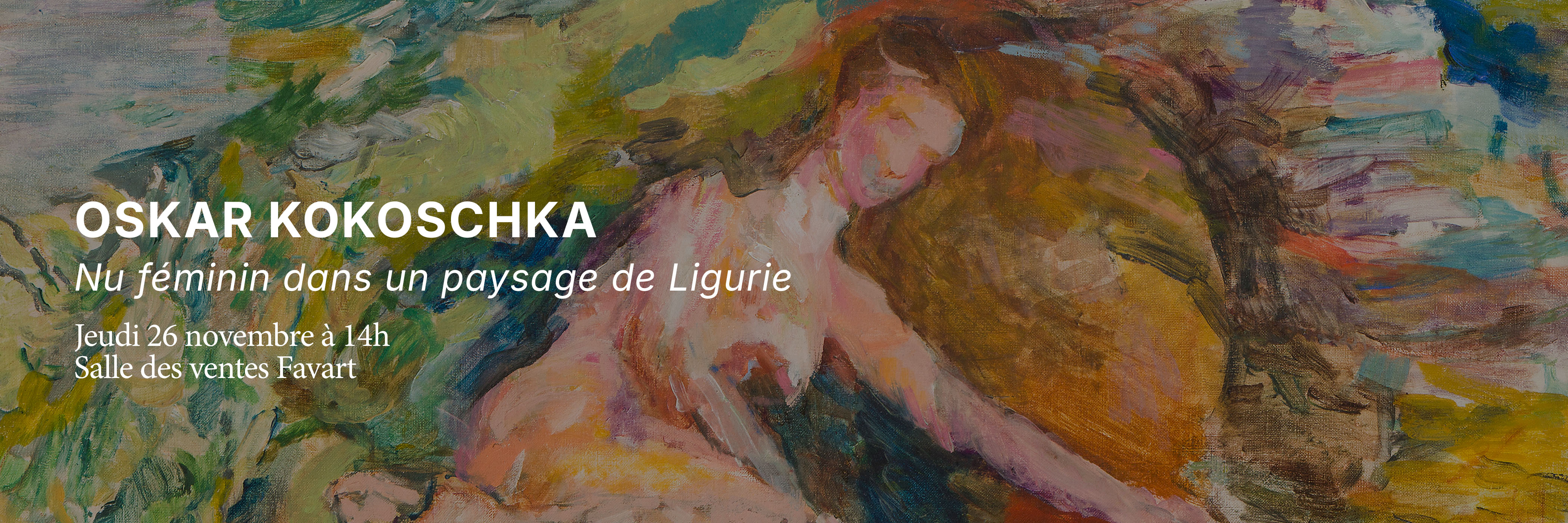
32 - Oskar KOKOSCHKA (1886–1980) Female Nude in a Ligurian Landscape, 1933 Oil on canvas. Monogrammed lower right. 60 x 72.5 cm Provenance: Anne and Arsène Bonafous-Murat Collection (1969). Exhibition: Bordeaux, Galerie des Beaux-Arts, Oskar Kokoschka 1886–1980, curated by Gilberte Martin-Méry, May 6–September 1, 1983, no. 20, reproduced on p. 96. Bibliography: Eveline Schlumberger, “Vagabond in Europe,” *Connaissance des Arts*, Paris, no. 375, May 1983, pp. 82–85 (on the occasion of the aforementioned exhibition). This work is listed in the artist’s Catalogue Raisonné, available online on the Oskar Kokoschka Foundation’s website, under no. 1933/8—https://oskar-kokoschka.ch
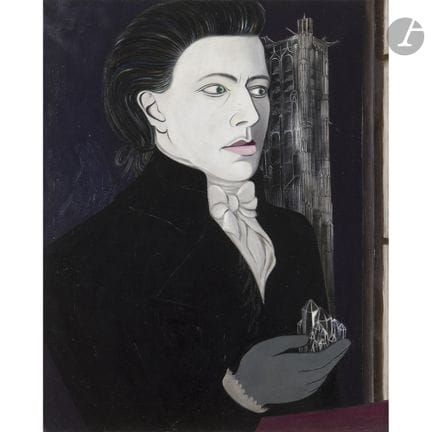
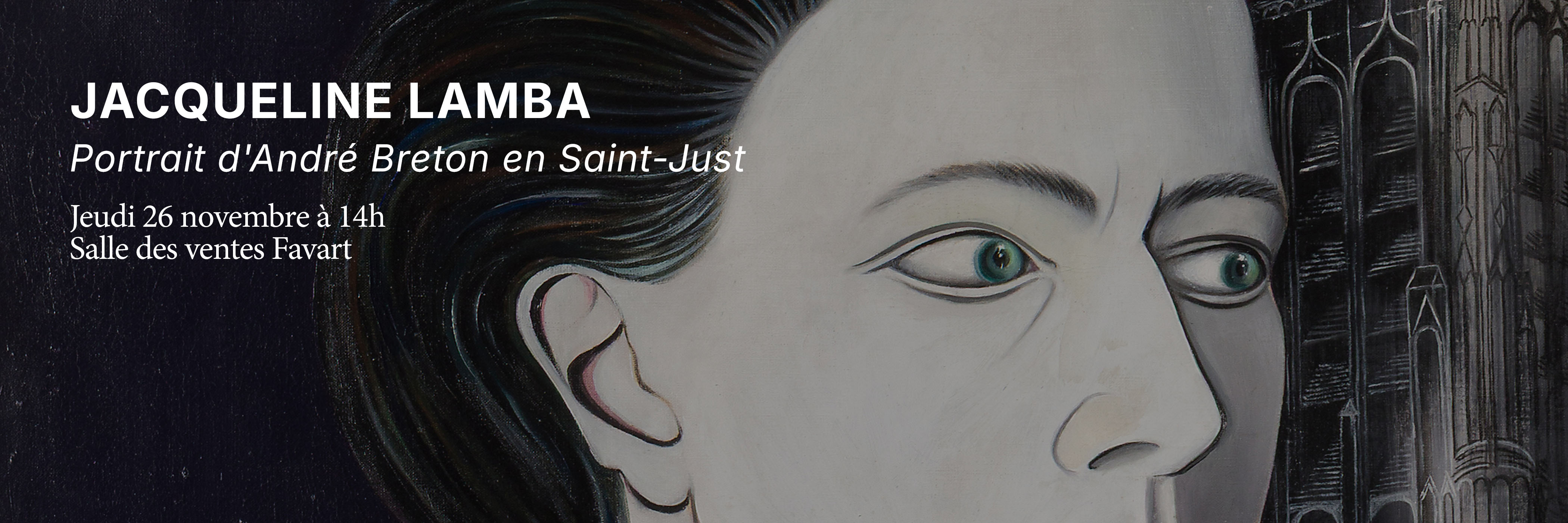
36 - Jacqueline LAMBA (1910–1993) Portrait of André Breton in Saint-Just, 1937. Oil on canvas. Annotated “July” on the back of the stretcher. 92 x 73 cm Bibliography: - Henri Béhar, *André Breton le grand indésirable*, Paris, Calmann-Lévy, 1990, reproduced. - *Jacqueline Lamba*, exhibition catalog, Galerie 1900-2000, Paris, December 2–30, 1998, reproduced on p. 38. - Salomon Grimberg, “Jacqueline Lamba: From Darkness to Light.” *Woman’s Art Journal*, vol. 22, no. 1, 2001, pp. 5–15, reproduced on p. 14. - Jacqueline Lamba, *Primavera, malia todo / Primavera, a pesar todo / Spring, In Spite of Everything*, exhibition catalog, Fundación Eugenio Granel, Santiago de Compostela, May 3 – July 9, 2001; Pollock-Krasner House and Study Center, East Hampton, New York, August 2, 2001 – October 20, 2001; Mills College Art Museum, Oakland, California; Salvador Dalí Museum, St. Petersburg, Florida. Text by Salomon Grimberg, reprinted on p. 19. - “Jacqueline Lamba, Story of an Ondine,” in Jacqueline Lamba, *La peinture jusqu’au ciel*, exhibition catalog, Château de Tours, September 8–November 4, 2007, Tours, Tours Éditions, pp. 10–16. - Alba Romano Pace, *Jacqueline Lamba, Rebellious Painter, Muse of Mad Love*, Paris, Gallimard, 2010, reproduced on p. 112. - Alba Romano Pace, “Jacqueline Lamba: The Air of Water, the Water of Air,” in *Femmes artistes: passions, muses, modèles*, exhibition catalog, Chilleurs-aux-Bois, Château de Chamerolles, June 16–July 19, 2012, Paris, Éditions Alternatives, reproduced on p. 45. - Alba Romano Pace, “Jacqueline Lamba, Innert to the Light,” in *Rendez-vous of Dreams: Surrealism and German Romanticism*, exhibition catalog, Kunsthalle Hamburg, June 13–October 12, 2025, reproduced on p. 295. - Salomon Grimberg, *Jacqueline Lamba: The Forgotten Surrealist*, Merrell, 2026, reproduced on p. 150. We thank Alba Romano Pace for the information she provided. Note to the buyer: This work was recently the subject of a loan request for a retrospective exhibition dedicated to Jacqueline Lamba, to be held at the Musée Cantini in Marseille from May 13 to October 3, 2027. We will be sure to forward this request to the buyer, as this initiative demonstrates the institutional and scholarly interest in the work and its artist.
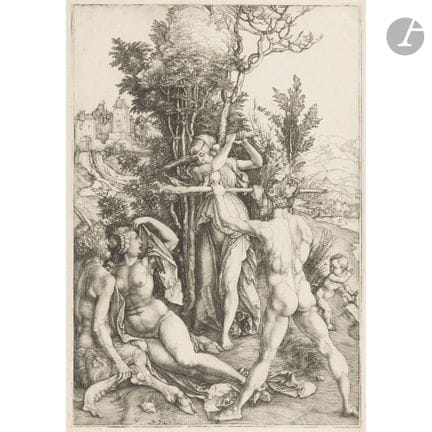
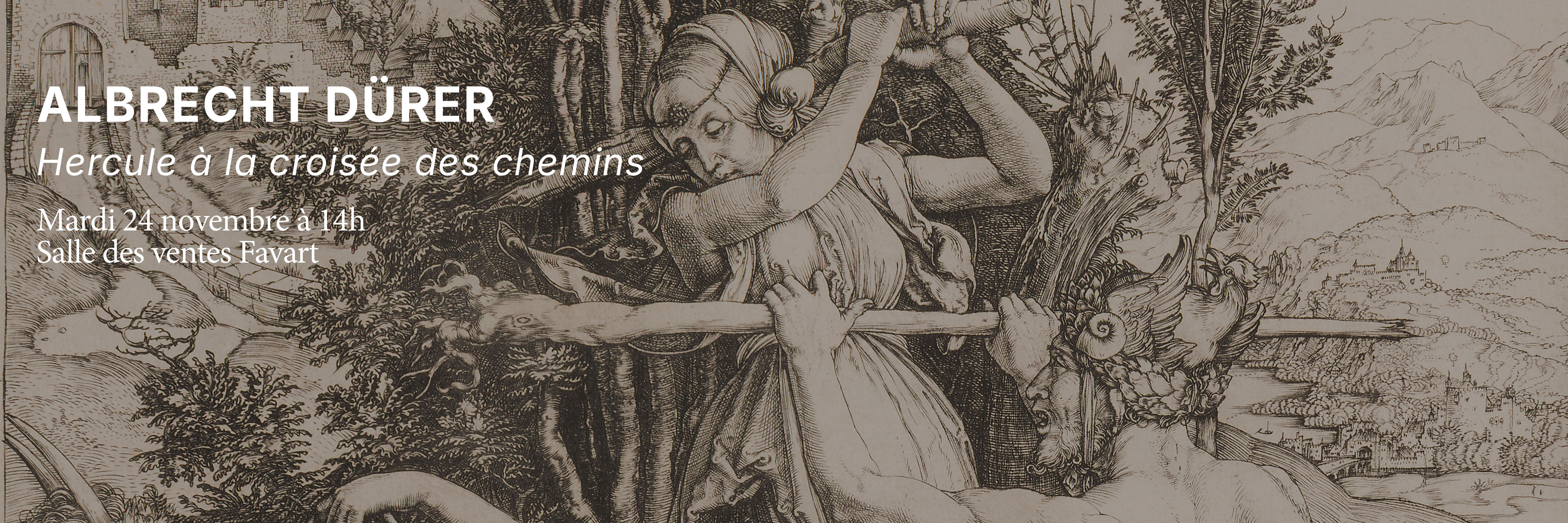
1 - Albrecht Dürer (1471–1528) Hercules at the Crossroads, or The Effects of Jealousy. Circa 1498–1499. Engraving. 220 x 318 [233 x 330 mm]. Bartsch 73; Hollstein 63; Meder 63b. A very fine and brilliant print on thin laid paper, with a watermark (small pitcher, Meder 158, dated circa 1498–1500) visible through the paper at the foot near the monogram, before the scratch across the right calf. The edges of the copper plate are heavily inked. A trace of a horizontal drying crease runs down the center. Tiny surface imperfections are visible at the edges when held up to the light. The press mark is very faintly softened at the foot. A slight diagonal crease is visible in the lower left corner on the reverse. Small margins (5 mm). Formerly in the collection of A. J. Hachette (Lugt 132). AABM stamp (Lugt 3075). This engraving achieves a remarkable cultural synthesis, fusing Germanic naturalism with the anatomical ideal of the Italian Renaissance (Hercules seen from behind is a homage to The Fight of the Naked Men, engraved by Antonio Pollaiuolo some thirty years earlier). The symbolism of the subject remains partly mysterious. Erwin Panofsky demonstrated that the scene depicts Hercules at a moral crossroads, where the choice is deliberately left open. It is unclear whether he is raising his club to ally himself with Virtue and exterminate Vice, or whether he is intervening to protect the carnal couple (Volupté and the satyr) from violent punishment. This indecision symbolizes the inner struggle of the human soul in the face of temptation. Added to this is a domestic dimension related to jealousy, which, through its violence, destroys the couple’s harmony. The natural setting reinforces this duality. On one side lies a dense, dark forest (linked to the satyr’s wild impulses), while on the other stands a structured landscape, leading toward a fortress or a city on a hill—a symbol of civilization, self-control, and fulfillment through Virtue.
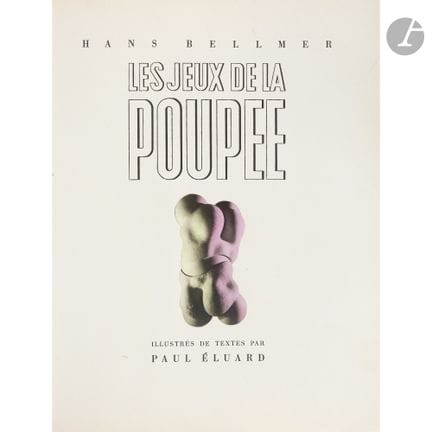
23 - BELLMER (Hans) - ÉLUARD (Paul). Les Jeux de la poupée. Paris: Les éditions Premières, 1949. — In-4, 245 x 193: 82 pp., (3 ff., last page blank), illustrated cover. Paperback, covered binding. One of the most famous and sought-after artist’s books. The work emerged from the encounter between a scandalous object and a poet. In 1930s Germany, Hans Bellmer created his articulated dolls—dismantlable female figures staged for photography—the first series of which, captured in ten black-and-white images, appeared under the title *Die Puppe* as early as the mid-1930s. Having taken refuge in Paris, between 1936 and 1938 he photographed a second doll, more abstract than the first, while Paul Éluard, captivated by these images, began in 1938 to compose, based on a series of photographs he had selected himself, the fourteen prose poems that would accompany the images. The path to publication was fraught with obstacles. The collection was initially slated to appear with Zervos, the publisher of *Cahiers d’art*; the war derailed the project. As early as 1946, Éluard entrusted the work to the young underground publishing house K Éditeur, which published a pre-original edition of the poems, illustrated with two photographs by Bellmer, and even circulated a subscription bulletin, before abandoning the project due to a lack of funding. It was not until 1949 that the book finally saw the light of day, thanks to the art dealer Heinz Berggruen, owner of Éditions Premières, as part of his GBMZ collection—Bellmer’s second masterful work centered on the doll, ten years after *Die Puppe*. The edition was entirely conceived by Bellmer, who created the layout and design. It opens with the author’s notes and reflections, which serve as a preface, and is adorned with two original photographs that have been cut out and mounted—one on the front cover, the other on the title page—as well as fifteen silver-gelatin prints hand-colored by the artist and mounted full-page, accompanied by Éluard’s fourteen poems. Limited edition of 142 copies on Crèvecœur du Marais vellum, signed by Bellmer on the margin; this copy is one of the 120 numbered copies ranging from 17 to 136 (no. 81). This book is featured in *The Photobook* by Parr and Badger. Many copies were dismantled to sell the photographs individually, so complete copies are now among the most sought-after Surrealist books. This copy is not only complete with all the photographs but also includes the teaser and the rare subscription form, both on pink paper. It was given by Bellmer to his friend and patron, the Bordeaux collector Claude RICHARD, with this dedication in pencil on the half-title page: Copy // for // Claude Richard // x // Hans Bellmer Claude Richard belonged to this small circle of friends and patrons, whose financial support literally enabled the artist to survive and continue creating. The spine is detached from the book block but shows no missing material. The stitches are loose between the first and second quires. Browning caused by the promotional strip and the subscription form on the half-title page and the facing leaf. Included are: - An invitation to the exhibition of paintings, photographs, lithographs, drawings, and portraits by Hans Bellmer at the Paul Morihien bookstore from May 9 to 26, 1952. - The cover of the extremely rare catalog prepared for Bellmer’s first exhibition of paintings and drawings in New York, scheduled to take place around 1948 at the Hugo Gallery, but which never occurred. It features a reproduction of a drawing by the artist dated 1940, known as *La Cathédrale*. - A flyer for the 1948 publication of the books *Ici et ailleurs* and *Hans Bellmer: Twenty-Five Reproductions, 1934–1950* (two copies, one pink and one blue). - An invitation to the Jean Odet exhibition at the Galerie Henriette in Paris from March 6 to 20, 1939, illustrated with a photograph of a drawing by Bellmer; the photograph is torn and has gaps.
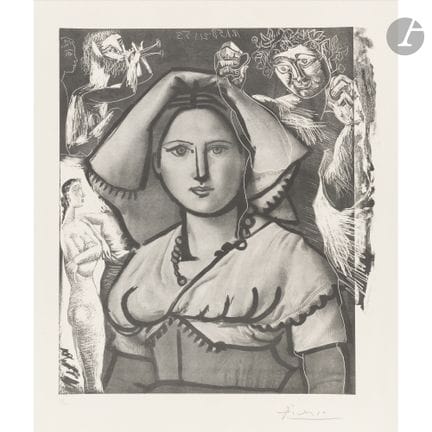
276 - Pablo Picasso (1881–1973) The Italian Woman. 1953. Zincography (on a photolithographed background of a painting by Victor Orsel). 350 x 442 [501 x 655 mm]. Bloch 740; Mourlot 238; Güse-Rau 573. A very fine print on ivory-colored "Arches" watermarked vellum, numbered and signed in pencil. Minor tears and a faint trace of oxidation along the edges, especially at the bottom. All margins untrimmed. Edition of 50 prints. Galerie Louise Leiris, ed. AABM stamp (Lugt 3075) In the Mourlot studio, Picasso came across a zinc plate onto which a painting by the Lyon-based artist Victor Orsel (1795–1850) had been transferred. This subject was intended for a poster advertising an exhibition on Lyon painting in November 1948. Upon returning with the plate to his studio on Rue des Grands-Augustins, Picasso reworked it extensively with ink, a brush, and a scraper to transform the subject into one of his compositions featuring a faun, Bacchus, and a nude woman frolicking together.
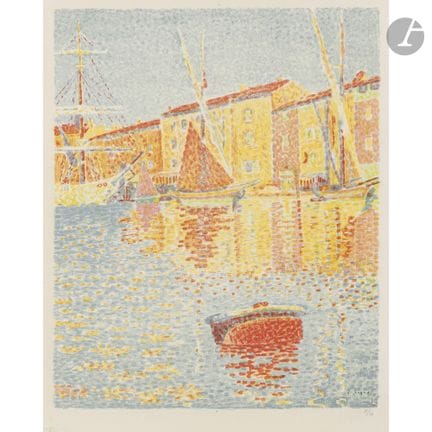
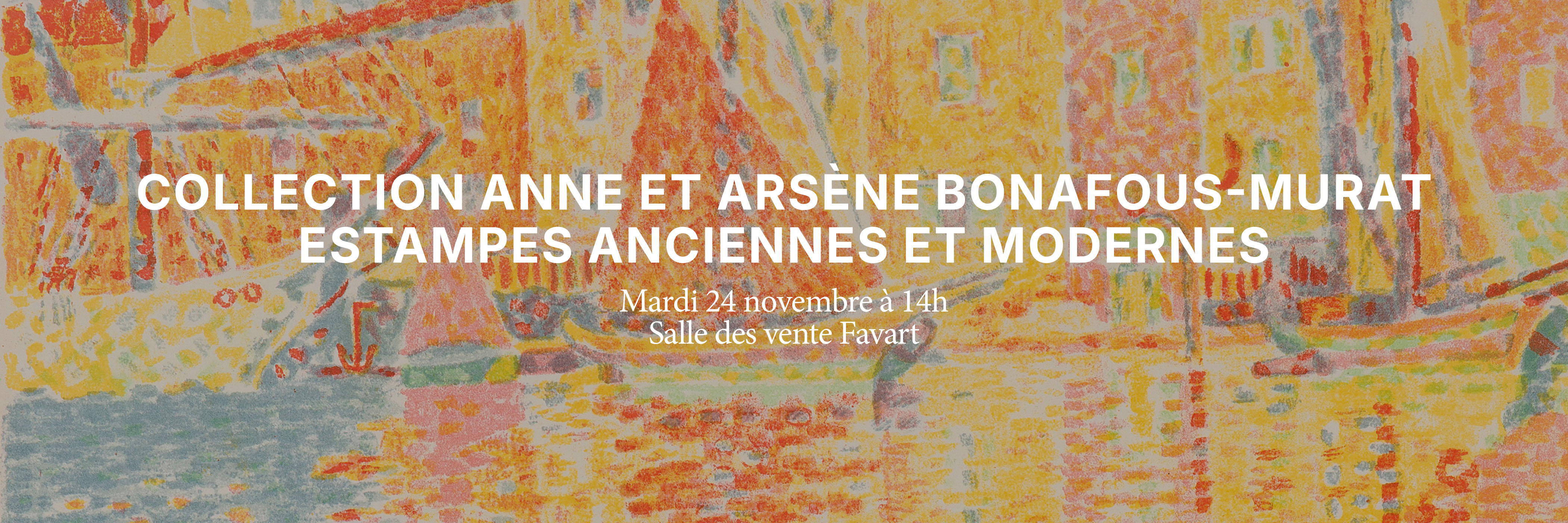
167 - Paul Signac (1863–1935) The Buoy (Saint-Tropez). 1894. Lithograph. 325 x 400 [405 x 530 mm]. Kornfeld-Wick 9 II. Color print. A superb and fresh print on thin white vellum, one of 20 with a green note (sailboats), signed in pencil within the image and numbered. Full margins. Published by G. Pellet. AABM stamp (Lugt 3075).
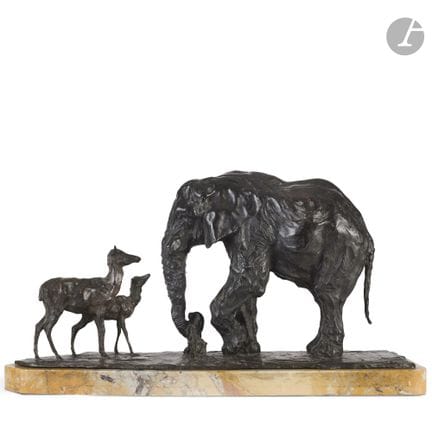
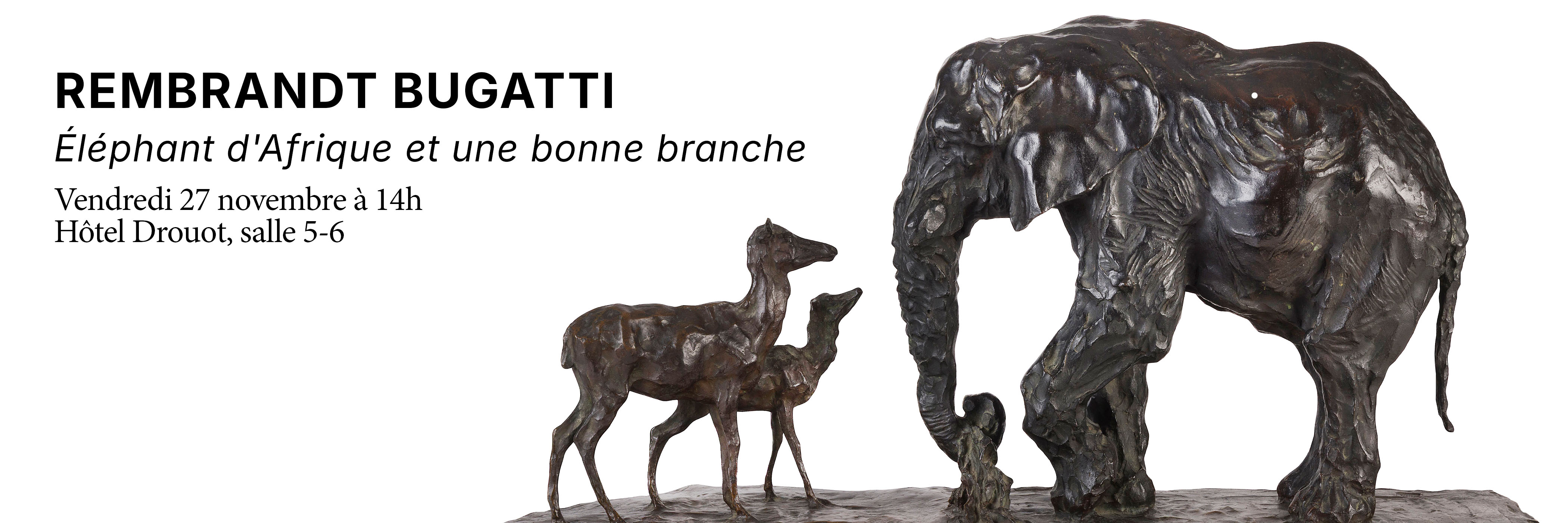
1 - REMBRANDT BUGATTI (1884–1916) – FORMERLY IN THE COLLECTION OF ANATOLE LAFOSSE (1864–1933), THEN PASSED DOWN THROUGH HIS DESCENDANTS African Elephant and Two Does—A “Good Branch,” a model designed around [1904] and exhibited that same year at the Galerie A.-A. Hébrard, then at the Salon of the Société Nationale des Beaux-Arts, Paris, 1905; our proof from the renowned original edition of three copies cast using the lost-wax method Sculpted group. Bronze cast with a black patina; tinged with brown, particularly on the terrace. Lost-wax casting executed by Albino Palazzolo. Early edition by Adrien-Aurélien Hébrard. Original Sienna yellow marble base. Signed and dated “R. BUGATTI Paris” on the front terrace; bears the stamp “A.A. HEBRARD Cire perdue” accompanied below by three small dots arranged in a triangle on the rear terrace. Bronze only: Height: 38 cm – Length: 75 cm – Width: 24 cm With marble base: Height: 42 cm – Length: 78.8 cm – Width: 28 cm Provenance: - Collection of Anatole Lafosse (1864–1933), owner of the Château du Mézo in Ploeren (Morbihan), member of the Yacht Club de France. - Work remained in the family of the previous owner; passed down through inheritance. Exhibitions featuring this sculpture: - The Rembrandt Bugatti Sculpture Exhibition – Galerie A.-A. Hébrard, 8 rue Royale, Paris, June 15–July 1, 1904 – A plaster cast of *African Elephant* and *Two Does – A Fine Branch* was presented at this event under number 18 in the exhibition catalog. - Salon of the Société Nationale des Beaux-Arts – Grand Palais, Paris, May 1–June 30, 1905. A bronze cast of *African Elephant* and *Two Does*—*A Good Branch*—presented at this event under catalog number 1712. - Rembrandt Bugatti; Retrospective Exhibition – Royal Zoological Society in Antwerp, July 16–August 2, 1955. A plaster cast of *African Elephant and Two Does—A Good Branch* was presented at this exhibition. Public collections: Musée d’Orsay, Paris – A fragment of the plaster group *African Elephant and Two Does – A Good Branch*, titled *Does and Fawn* (small fawn turning around), is held in the institution’s collections under inventory number RF 35350 Bibliography: - *L’Art décoratif* – No. 71, August 1904. A plaster cast of *African Elephant and Two Does – A Good Branch* reproduced on page 61. - *Art et Décoration*—July 1905. A bronze proof of *African Elephant and Two Does—A Good Branch* is reproduced on page 14. - Valentino Rossi-Sacchetti—*Rembrandt Bugatti, Sculptor*; monograph – Carlo Bugatti and His Art – Imprimerie de Vaugirard, Paris, 1907. A bronze proof of *African Elephant and Two Does – A Fine Branch* reproduced on a separate plate. - Philippe Dejean – Carlo – Rembrandt – Ettore – Jean Bugatti – Les Éditions du Regard, Paris, 1981. A plaster cast of *African Elephant* and two does—*A Good Branch* reproduced on page 353. - Véronique Fromanger – Rembrandt Bugatti, Sculptor – A Meteoric Career – Monographic Catalog – Les Éditions de l’Amateur, Paris, 2016. The bronze proofs of *African Elephant and Two Does – A Lush Branch* are listed on page 282 under catalog number 82; a plaster proof is reproduced on the same page (ref. 82).
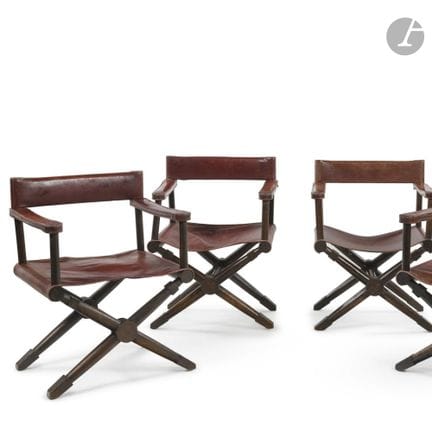
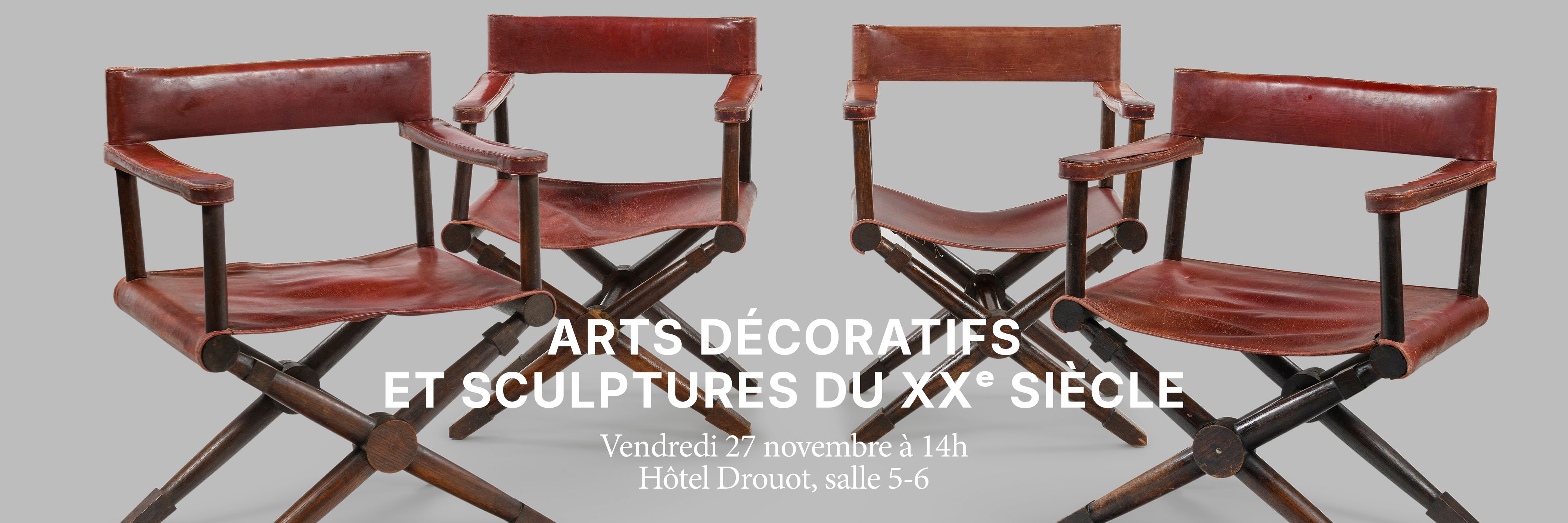
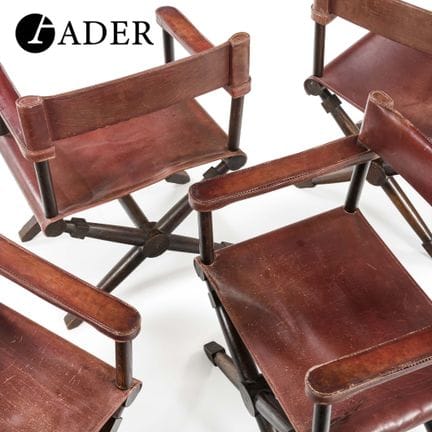
60 - JEAN-MICHEL FRANK (1895–1941) INTERIOR DESIGNER – PAUL RODOCANACHI (1871–1952) DESIGNER OF THE MODEL Model commonly known as “Rodo,” sometimes called “Metteur en scène,” created in [1929]; our pieces were likely made that same year. Set of 4 armchairs in original brown-stained oak. Each features two X-shaped legs with spear-tip finials, connected by dice-shaped joints and joined by a cylindrical crossbar—the backrest posts and armrest brackets are also cylindrical. The seats and backs (with the exception of one seat) are upholstered in red leather with original Hermès saddle stitching. The armrests and tops of the backrest posts are originally upholstered in red leather with Hermès saddle stitching. Shows signs of use; scattered imperfections and minor restorations on the oak frames; two red leather seats are partially torn at the front; scattered wear, stains, and discoloration on the leather parts; broken saddle stitching; some leather seat fastenings reinforced with staples; the red leather seat has been replaced on one of the chairs. One armchair bears the number 161, a second the number .6., and a third the number 164; all have a mark on a leather section of the seats near the fastening on the back. Height: 81 cm – Length: 61 cm – Depth: 45 cm Provenance: - René Moreuil (1908–1982) and Andrée Babette Moreuil (née Scheuer) (1911–2003), known as Poumy, who was at one time a translator for Bertolt Brecht and who was a friend of Louis Aragon. René and Andrée Babette were very close to many intellectuals and artists and were prominent members of the Resistance. After escaping from the camp where he was imprisoned at the start of the war, René joined Charles de Gaulle and then went to fight in Libya—he represented Free France in Syria and Lebanon until 1944 —while Andrée Babette was entrusted with high-risk missions on French soil. - By descent. Important: A certificate issued by the Jean-Michel Frank Committee for our set of four armchairs will be provided to the purchaser. Exhibition: Jean-Michel Frank: An Interior Designer in 1930s Paris—Pierre Bergé–Yves Saint Laurent Foundation, October 2, 2009, through January 3, 2010. Similar armchairs were featured in this exhibition. Bibliography: - *Art et Décoration* – No. 1, January–March 1939. Similar armchairs are reproduced on page 5 in an article titled “The Poetic Exegesis of Jean-Michel Frank,” written by Roger Lannes. - *Art et Industrie* – No. 1, November 1945. Similar armchairs are reproduced on pages 19 and 20 in an article titled “The Work of Jean-Michel Frank,” written by Jacques Lassaigne. - Léopold Diego Sanchez – Jean-Michel Frank – Éditions du Regard, Paris, 1980. Similar armchairs are reproduced on pages 17, 153, 163, and 189. - Anne Bony – The 1940s – Éditions du Regard, Paris, 1985. Similar armchairs are reproduced on page 445. - Léopold Diego Sanchez – Jean-Michel Frank – Éditions du Regard, Paris, 1997. Similar armchairs are reproduced on pages 21, 158–159, 168–169, and 222. - François Baudot – J.M. Frank: A World of Style – Éditions Assouline, Paris, 1998. Similar armchairs, with variations in oak and leather finishes, are reproduced on pages 32, 64–65, 77, and 79. - Pierre-Emmanuel Martin-Vivier – Jean-Michel Frank – Éditions Norma, Paris, 2006. Similar armchairs are reproduced on pages 155, 190, 191, 218, and 255. - Various Authors – Jean-Michel Frank: An Interior Designer in 1930s Paris – Catalog of the eponymous exhibition organized by the Pierre Bergé–Yves Saint Laurent Foundation from October 2, 2009, to January 3, 2010, Éditions Norma, Paris, 2009. Similar armchairs are reproduced on pages 65 and 131. Paul Rodocanachi (1871–1952) An architect from a Greek family that had emigrated to Marseille, Paul Rodocanachi remains a relatively little-known designer today, despite his notable contribution to the renewal of the decorative arts between the two world wars. His close relationship with Emilio Terry (1890–1969) led him to meet Jean-Michel Frank, and he became—alongside Christian Bérard, Alberto Giacometti, and Terry himself—one of Frank’s closest collaborators. Note: The information cited in this text is taken from: Pierre-Emmanuel Martin-Vivier – Jean-Michel Frank – Éditions Norma, Paris, 2006, pp. 218–219. Rodocanachi’s artistic sensibility is rooted in a deep understanding of 18th-century French architecture and the classical tradition, complemented by his sense of volume and proportion, as well as a certain decorative restraint—which is not unlike Frank’s work. His mansion in Neuilly-sur-Seine, built in 1902, is a perfect illustration of this. Introduced to Jean-Michel
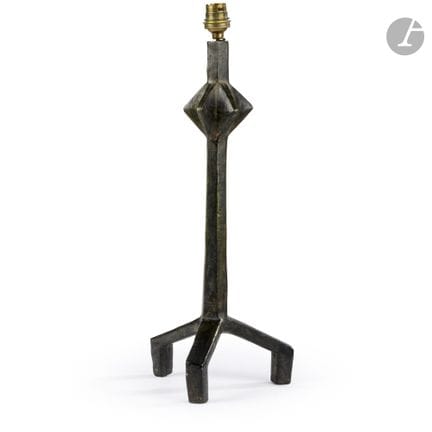
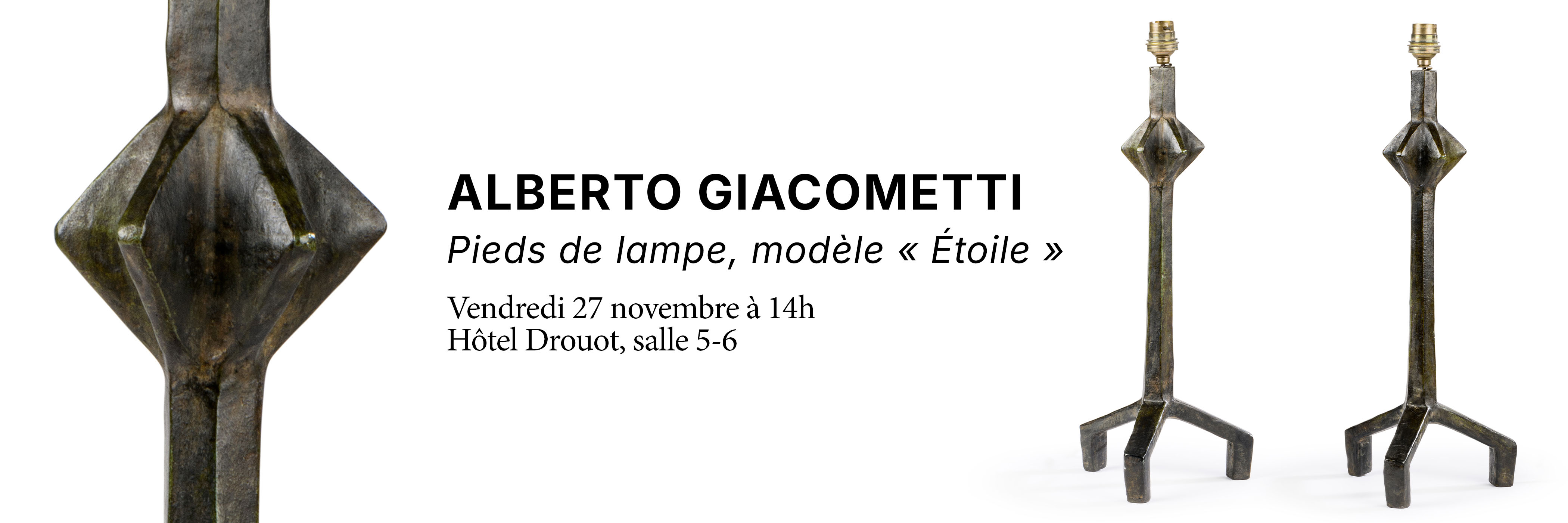
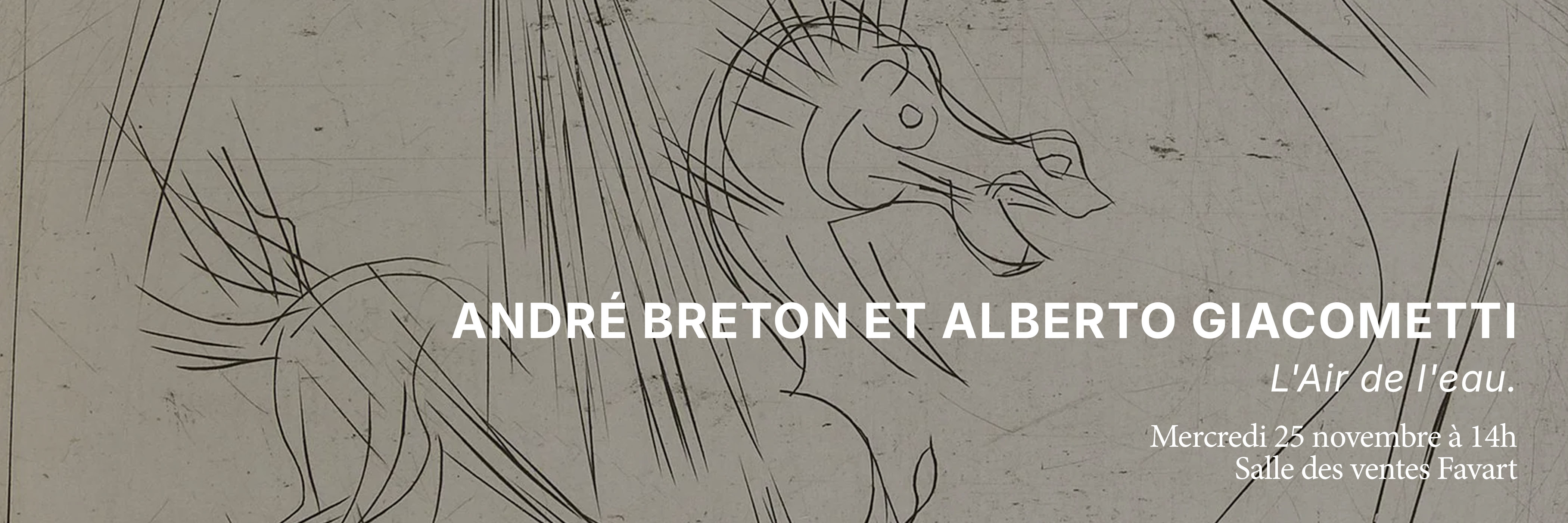
63 - ALBERTO GIACOMETTI (1901–1966) Star, model created around [1935] Lamp base. Bronze cast with a rich brown-black patina, very slightly tinged with antique green. Signed “DIEGO” and with the stylized monogram “D.G.” on the edge of one of the legs; monogrammed and numbered “AG083” on the base by the Giacometti Committee beneath one of the legs. Height: 40.5 cm Important: This work has been included in the artist’s catalog raisonné and referenced in the Alberto Giacometti Database under number AGD 4831 by the Giacometti Foundation. A document from the Giacometti Foundation confirming the inclusion of this work in the artist’s catalog raisonné and its listing in the Alberto Giacometti Database will be provided to the buyer. Provenance: Private collection, France. Bibliography: - *Mobilier et Décoration* – No. 3, 1946. An identical model is reproduced on page 15. - *Art et Industrie* – No. 5, 1946. An identical model is reproduced on page 7. - *Art et Décoration* – No. 2, 1946. An identical model is reproduced on page 83. - *Art et Décoration* – No. 11, 1948. An identical model is reproduced on page 11. - Léopold Diego Sanchez – Jean-Michel Frank – Éditions du Regard, Paris, 1980. An identical model is reproduced on page 200. - Various Authors – Diego Giacometti – Catalogue of Works – Éditions Eolia, Paris, 1986. An identical model is reproduced in this volume (unpaginated). - Christian Boutonnet and Rafael Ortiz, with a foreword by James Lord – Diego Giacometti – Éditions de l’Amateur/Galerie L’Arc-en-Seine, Paris, 2003. Identical models reproduced on page 42. - Pierre-Emmanuel Martin-Vivier – Jean-Michel Frank – Éditions Norma, Paris, 2006. Identical models reproduced on pages 294 and 347. The buyer is responsible for the resale royalty on this lot.
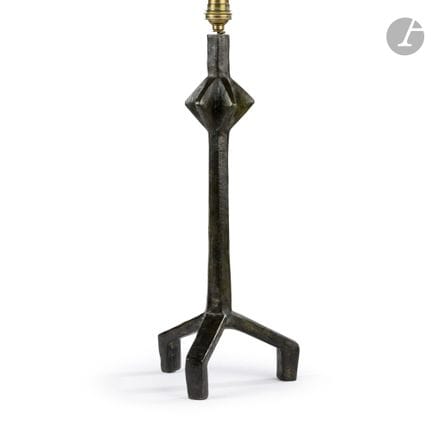
64 - ALBERTO GIACOMETTI (1901–1966) Star, model created around [1935] Lamp base. Bronze cast with a rich brown-black patina, very slightly tinged with antique green. Signed “DIEGO” and with the stylized monogram “D.G.” on the edge of one of the legs; monogrammed and numbered “AG084” on the base by the Giacometti Committee beneath one of the legs. Height: 40.5 cm Important: This work has been included in the artist’s catalog raisonné and referenced in the Alberto Giacometti Database under number AGD 4832 by the Giacometti Foundation. A document from the Giacometti Foundation confirming the inclusion of this work in the artist’s catalog raisonné and its listing in the Alberto Giacometti Database will be provided to the buyer. Provenance: Private collection, France. Bibliography: - *Mobilier et Décoration* – No. 3, 1946. An identical model is reproduced on page 15. - *Art et Industrie* – No. 5, 1946. An identical model is reproduced on page 7. - *Art et Décoration* – No. 2, 1946. An identical model is reproduced on page 83. - *Art et Décoration* – No. 11, 1948. An identical model is reproduced on page 11. - Léopold Diego Sanchez – Jean-Michel Frank – Éditions du Regard, Paris, 1980. An identical model is reproduced on page 200. - Various Authors – Diego Giacometti – Catalogue of Works – Éditions Eolia, Paris, 1986. An identical model is reproduced in this volume (unpaginated). - Christian Boutonnet and Rafael Ortiz, with a foreword by James Lord – Diego Giacometti – Éditions de l’Amateur/Galerie L’Arc-en-Seine, Paris, 2003. Identical models reproduced on page 42. - Pierre-Emmanuel Martin-Vivier – Jean-Michel Frank – Éditions Norma, Paris, 2006. Identical models reproduced on pages 294 and 347. The buyer is responsible for the resale royalty on this lot.
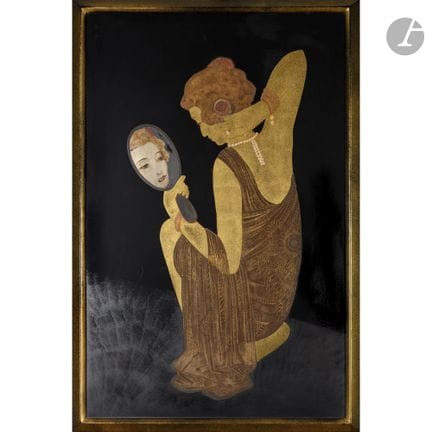
27 - JEAN DUNAND (1877–1942) – COLLECTION OF THE ARTIST’S FAMILY The Hand Mirror – Madame André Lazard, circa 1930–1935 Panel with a frame integrated into the work. Black lacquer, colored lacquers, gold lacquer, silver leaf. The frame is profiled in black and gold lacquer. Unsigned. Height: 105 cm – Length: 70 cm Visible panel: Height: 98 cm – Length: 62.5 cm Provenance: The artist’s family. Bibliography and related works: - Félix Marcilhac – Jean Dunand; Life and Work – Les Éditions de l’Amateur, Paris, 1991. A variation in the lacquer colors and patterns on the dress fabric, reproduced on pages 22 and 220 (cat. 175). - Félix Marcilhac and Amélie Marcilhac – Jean Dunand – Éditions Norma, Paris, 2020. A variation in the lacquer colors and patterns of the dress fabric, reproduced on page 222 under reference 53 in the Catalog of Works – Portraits.
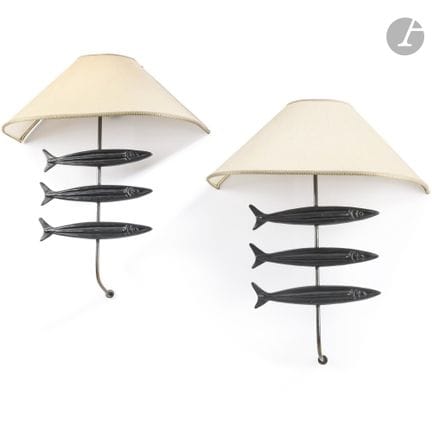
77 - GEORGES JOUVE (1910–1964) The Three Fish, the only two examples known to date to be enamelled in black; a model created around 1952 and presented (in a polychrome version) at Raphaël Raffel’s booth at the Salon des Arts Ménagers, Paris, 1952 Pair of wall sconces with two light sources. The decorative motifs are made of black-glazed ceramic; the frame is tubular brass; the lampshades have been reupholstered. Height: 58 cm – Length of the fish: 25.5 cm Provenance: Our pieces come from an apartment in Paris’s 17th arrondissement that was entirely decorated by Raphaël Raffel; period photographs of this interior design were published in the book dedicated to the artist by Guy Bloch-Champfort (page 37). Bibliography: - *Mobilier et Décoration* – No. 3, April 1952. A similar model is reproduced on page 17. - *Le Décor d’aujourd’hui* – No. 81, September 1953. A similar wall sconce is visible in a photograph taken in the artist’s home-studio (rue de la Tombe-Issoire, Paris) reproduced on page 300 in an article titled “Ici habite un artiste,” by Jouve. - Guy Bloch-Champfort – Raphaël décorateur – Les Éditions de l’Amateur, Paris, 2002. Our wall sconces are visible in the photograph of Mr. and Mrs. X’s apartment in Paris, reproduced on page 37; the color version appears in the photograph of the decorator’s booth at the 1952 Salon des Arts Ménagers, reproduced on the same page. - Foreword by Pierre Bergé, texts by Philippe Jousse and Norbert Pierlot – Georges Jouve – Éditions Jousse Entreprise, Paris. A similar wall sconce model is visible in an archival photograph (1959 exhibition booth) reproduced on page 289. - Karine Lacquemant – Georges Jouve – Éditions Norma, Paris, 2025. A similar wall sconce model can be seen in a photograph taken in the artist’s home-studio (rue de la Tombe-Issoire, Paris), reproduced on page 69.
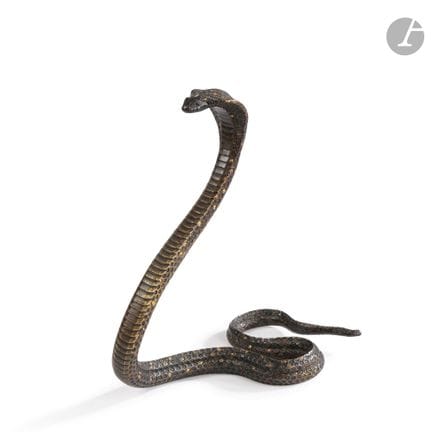
28 - JEAN DUNAND (1877–1942) Standing Naja, model created around [1914] Rare sculpture; can be used as a paperweight. Chiseled and patinated bronze cast; some scales highlighted with gilding, others with red lacquer. 1920s. Signs of wear on the patina. Signed Jean DUNAND, on the reverse. Height: 23 cm – Length: 21.5 cm Provenance: J. Delamain Collection, old and modern paintings, 20th-century decorative arts—from a private collection in Île-de-France—Fraysse et Associés auction, Hôtel Drouot, April 15, 2015. This piece is listed as lot 78 in the catalog. Acquired by the previous owner at the aforementioned auction. Bibliography and related works: - *Art et Décoration* – September–October 1919. A variant is reproduced on page 118. - Félix Marcilhac – Jean Dunand; Life and Work – Les Éditions de l’Amateur, Paris, 1991. Slight variations reproduced and described on page 273 (cat. nos. 663–666). - Félix Marcilhac and Amélie Marcilhac – Jean Dunand – Éditions Norma, Paris, 2020. Slight variations reproduced and described on pages 326, 327, and 328 under references 15 through 19 in the “Catalog of Works – Objects.”
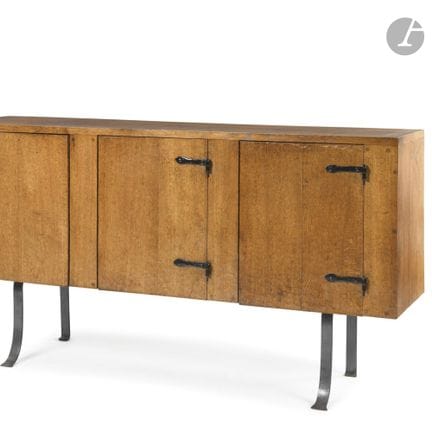
88 - THE ARTISANS OF MAROLLES AND LOIR-ET-CHER – AN ASSOCIATION ORIGINALLY FOUNDED BY JEAN TOURET (1916–2004), SCULPTOR Custom piece made specifically for Mr. and Mrs. X, with notches at the bottom of the doors, circa 1962 Rare oak sideboard with peg-jointed construction. The front, with a honeycomb-patterned gouge-carved finish, features three solid doors flush with the frame—the door panels are fitted with blackened wrought-iron hinges and hinges, each with a recessed section at the bottom serving as a handle. The legs are made of wrought iron and blackened; the front legs are curved, while the rear legs are L-shaped. The interior is fitted with a long crosswise shelf. Shows signs of use; one assembly mark on each side panel. Height: 86 cm – Length: 179.5 cm – Depth: 45 cm Provenance: From a large collection acquired around 1962 by the parents of the current owners. Bibliography and related works: Anne Bony, Axelle Corty, François Touret, Jean Touret – Jean Touret – Les Éditions de l’Amateur, Paris, 2022. Variations reproduced on pages 201–203.
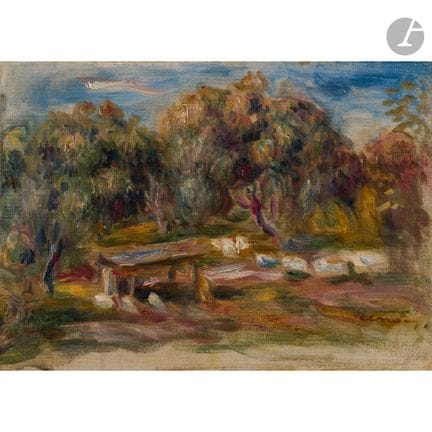
15 - Pierre-Auguste RENOIR (1841–1919) Landscape with a Washhouse, ca. 1910 Oil on canvas. Signed lower right in red. 23 x 31.5 cm Provenance: Collection of Mrs. D. Bibliography: Guy-Patrice Dauberville and Michel Dauberville, Renoir: Catalogue Raisonné of Paintings, Pastels, Drawings, and Watercolors, vol. IV, 1903–1910, Paris, Bernheim-Jeune, 2012, no. 2948, p. 159. This work will be included in the Pierre-Auguste Renoir Digital Catalogue Raisonné Project, currently in preparation, under the auspices of the Wildenstein Plattner Institute, Inc.
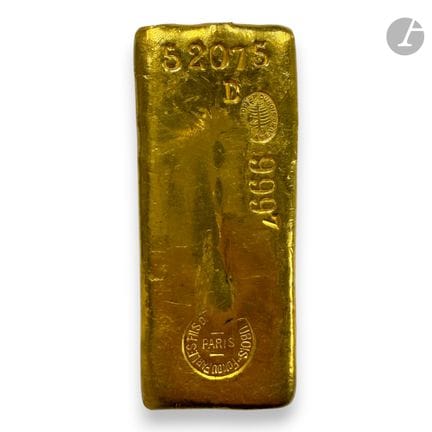
1 - A 999.7°/°° gold bar, numbered 52075. Stamped "ROBERT DUBOIS ESSAYEUR." Net weight: 1003.08 g SALES FEE: 8% (excluding tax)
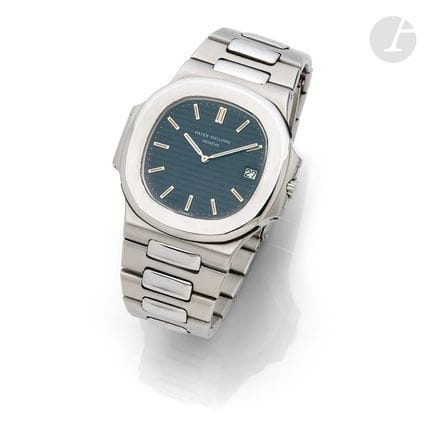
313 - PATEK PHILIPPE NAUTILUS ‘JUMBO’. REF. 3700/1A. Stainless steel wristwatch, the first reference of the model launched in 1976. Case: cushion-shaped with flanges, flat matte steel bezel, polished middle case, solid caseback, secured with four concealed side screws, semi-integrated crown, No. 536392. Dial: blue-gray “sigma” pattern, applied gold baton hour markers, doubled at 12 o’clock, dot minute track (Mark II), service baton hands, date window. Movement: automatic, ultra-thin, cal. 28-255C, Geneva Seal, Gyromax balance wheel, No. 1,305,628. Bracelet: integrated steel, matte and polished links, folding clasp (1st generation), signed, Calatrava Cross emblem on the clasp. Dial, case, and movement are signed. Diameter: 42 mm. Includes: Extract from the Patek Registers dated November 23, 2026
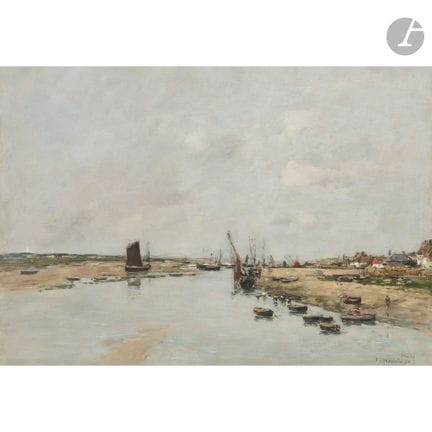
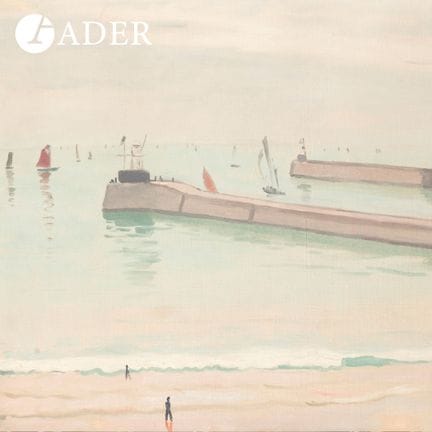
3 - Eugène BOUDIN (1824–1898) Étaples, the Harbor at Low Tide, 1890 Oil on canvas. Signed, dated, and inscribed with the location in the lower right corner. (Re-stretched). 46.5 x 65 cm Provenance: - Galerie Charpentier auction, Paris, June 16, 1959, lot 49, illustrated in the catalog. - Arthur Bourgès Collection, Bordeaux (inscriptions on the stretcher). - Private collection. - Crédit Municipal auction, Paris, November 27, 2004, lot 68, illustrated in the catalog on p. 22. - Estate of Madame C, Paris. Acquired at the previous auction. Bibliography: Robert Schmit, Eugène Boudin. 1824–1898, Paris, Robert Schmit, 1973, vol. III, no. 2620, reproduced on p. 27.
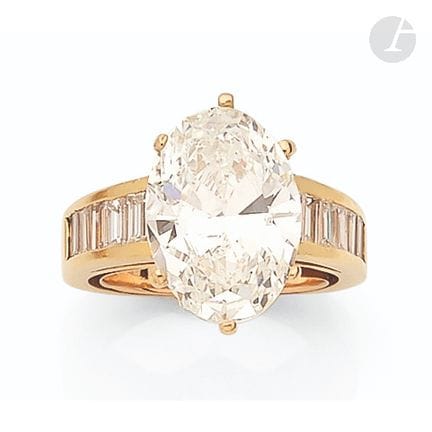
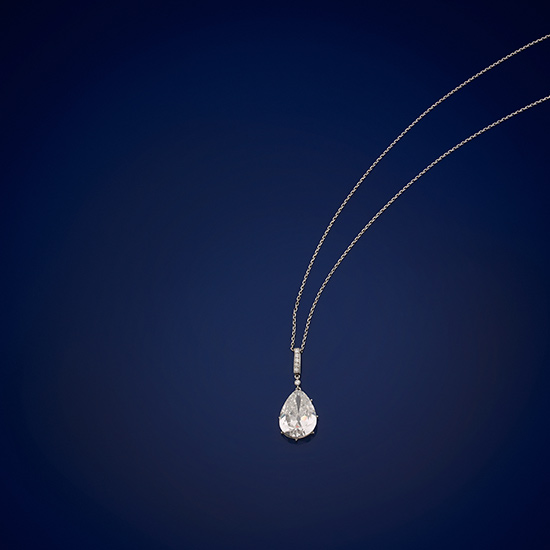
122 - VASSORT 18K (750) gold ring, set with an oval diamond weighing 6.08 carats, flanked by baguette-cut diamonds. Unmarked, master’s hallmark. Ring size: 52. Diamond dimensions: 15.19 x 10.85 x 5.98 mm. Gross weight: 9.2 g The diamond is accompanied by an LFG report (2026) certifying: color H, clarity SI2, low fluorescence
News
.jpg)
The History of Rodo Armchairs
Four examples of the 1929 model, in their original oak and Hermès leather, have been preserved to this day by the family of a couple who were members of the Resistance.

La Mère Germaine: The Wine Cellars of a Michelin-Starred Restaurant
On November 16 and 17, the Ader Auction House will auction off part of the wine collection from La Mère Germaine, a historic restaurant in Châteauneuf-du-Pape. 1,297 lots across two auction...
.jpg)
A double-sided drawing by Modigliani
The Ader Auction House will soon present a double-sided sheet by Amedeo Modigliani, featuring "Standing Female Nude" on the front and "Study of a Standing Man" on the back, executed around 1909 (in...
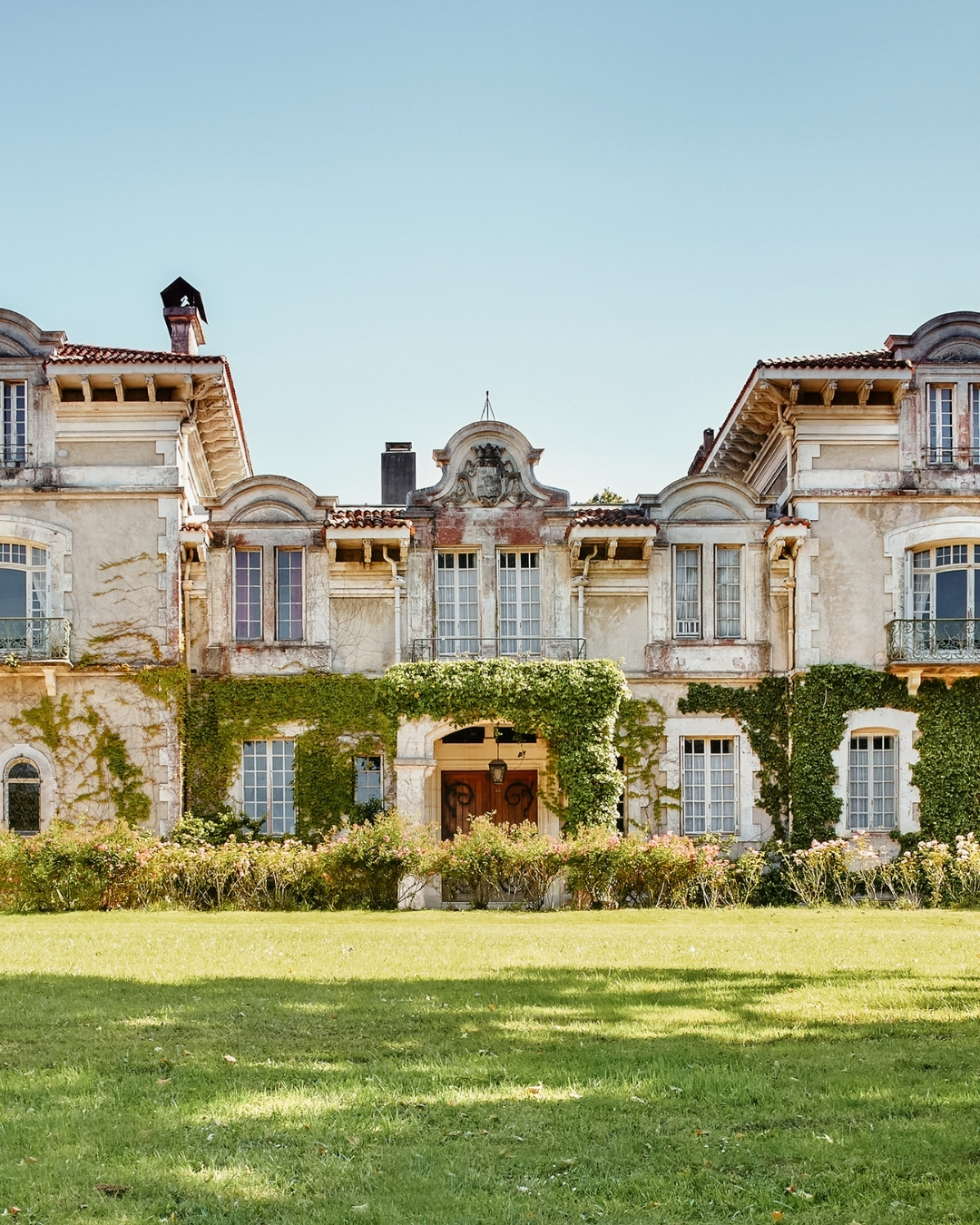
Arcangues Castle: An Inventory of Basque Heritage
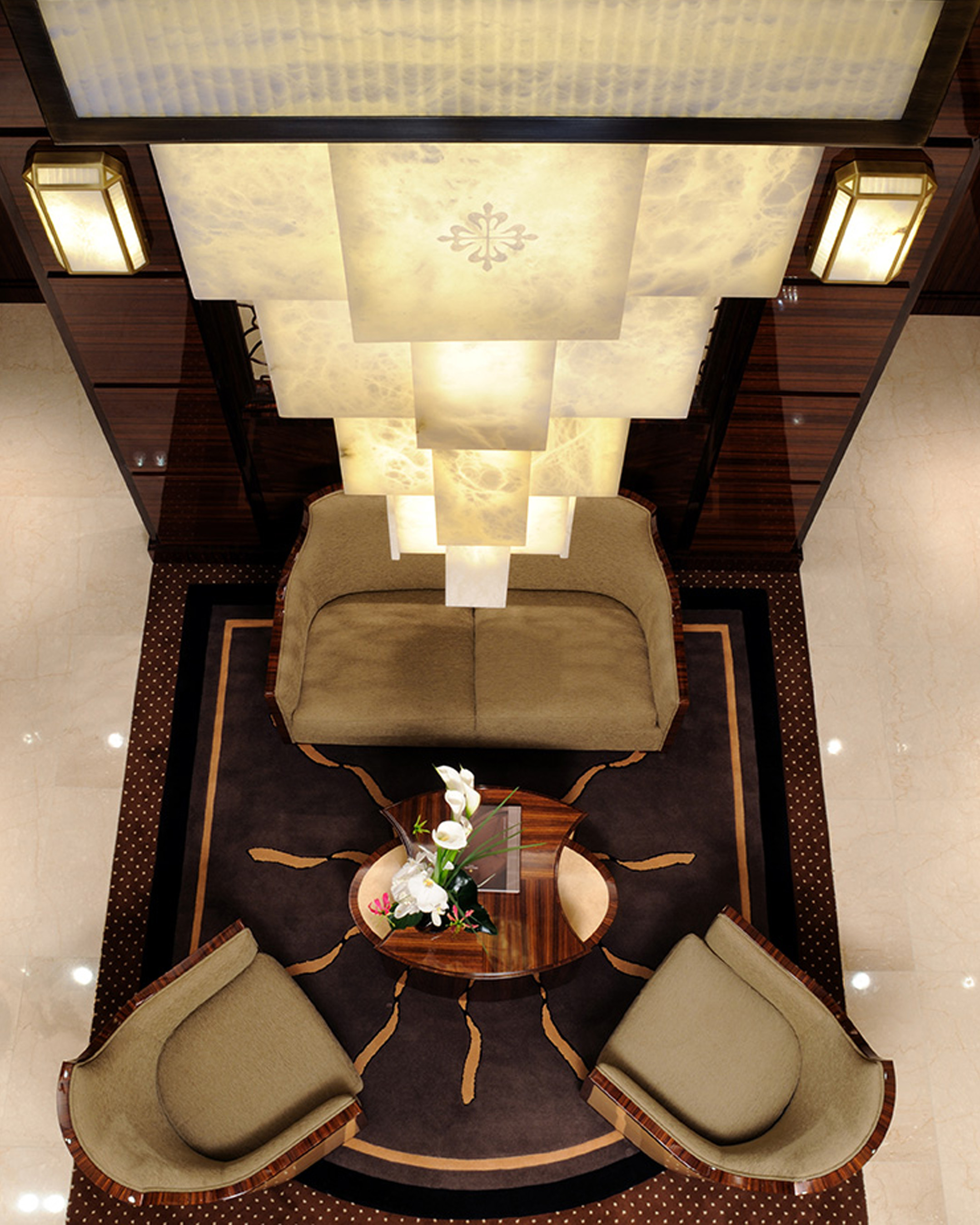
Patrick Gaguech, a leading figure in French interior design
Buy
How to Bid
In person, by phone, via a purchase order, or online. Fees, payment, and pickup of lots.
Services
Shipping, Storage & Insurance
Approved partners, online quotes, delivery in France and internationally.
The House
History, Team & Locations
Drouot, Paris’s 16th arrondissement, Neuilly-sur-Seine, Brussels. The team, the auctioneers, our values.