
.jpg)
The History of Rodo Armchairs
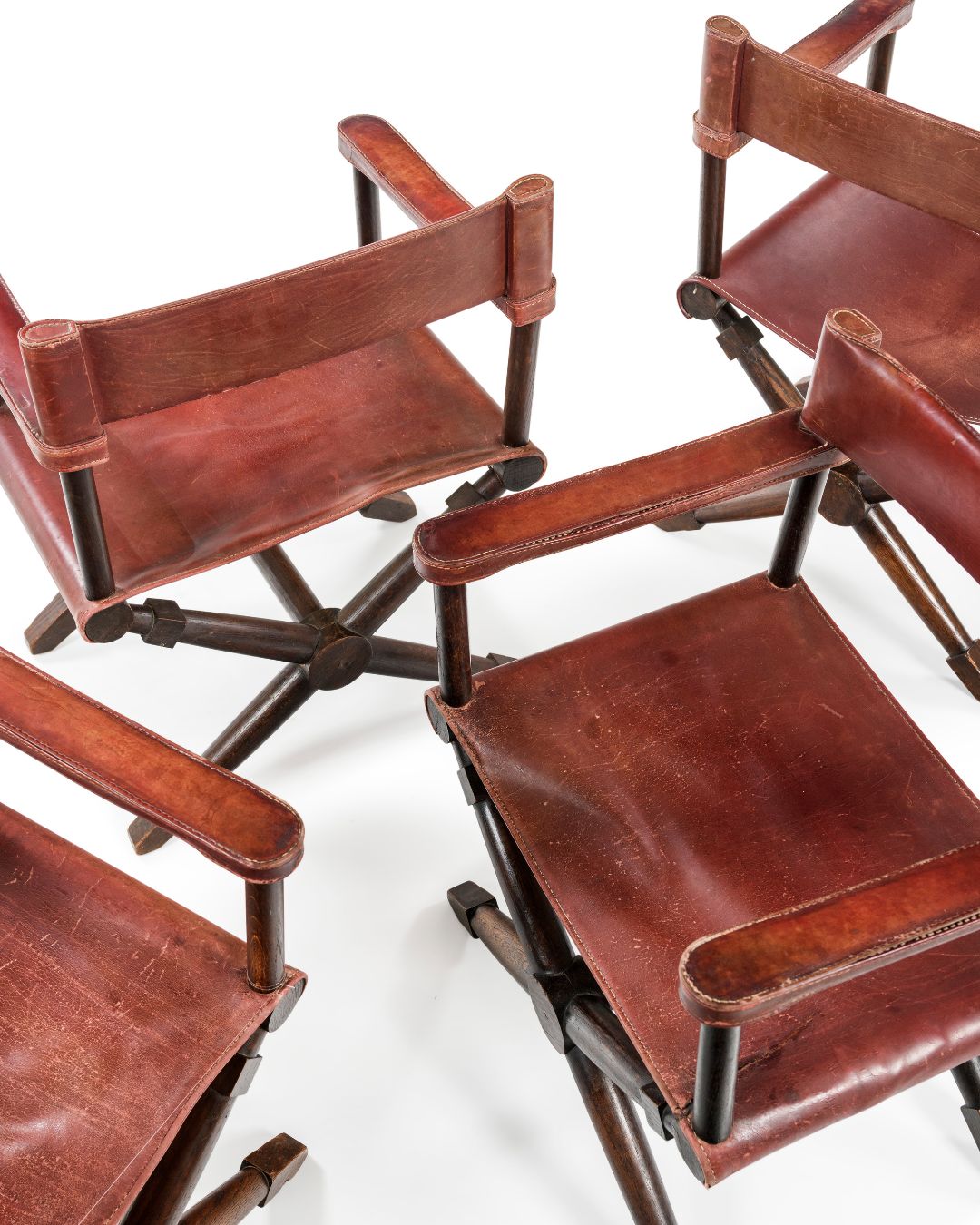
Four examples of the 1929 model, in their original oak and Hermès leather, have been preserved to this day by the family of a couple who were members of the Resistance.
It is instinctively attributed to Jean-Michel Frank. It shares his precision, his economy of form, and his rejection of ornamentation. Yet the Rodo armchair bears, in its very name, the signature of another: Paul Rodocanachi (1871–1952), an architect of Greek origin born into a family settled in Marseille, who designed it in 1929. He was 58 at the time; Frank was 34. The younger one produced it; the older one designed it.
A country chair that made its way into the salon
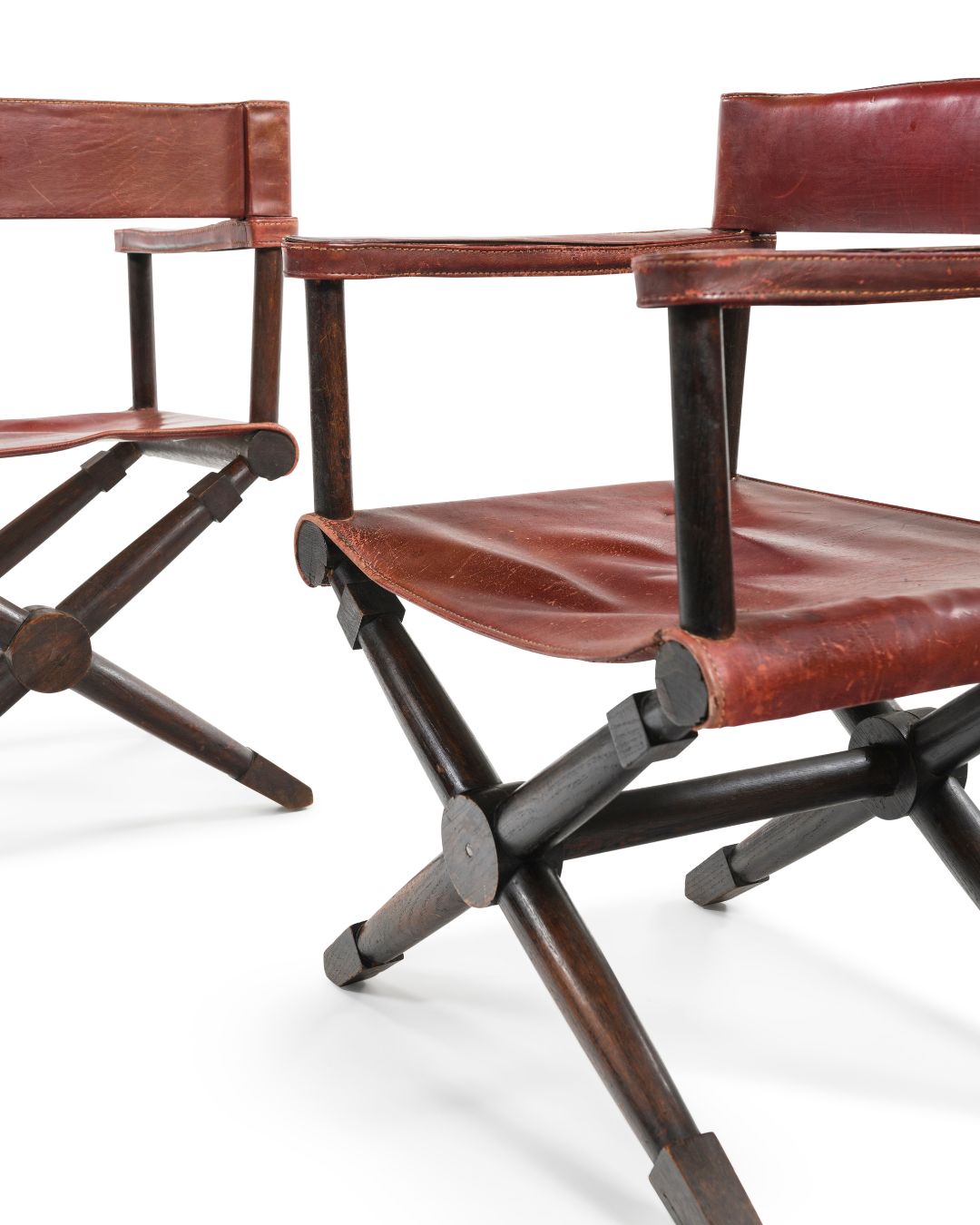
Its other name, “Metteur en scène,” says it all. Two X-shaped legs, a crossbar, cylindrical uprights, and leather simply stretched between the wood, as on a folding chair. Rodocanachi, inspired by 18th-century architecture, takes the most nomadic form imaginable and captures it in stained oak. The red leather, meanwhile, is saddle-stitched at Hermès. This encapsulates the entire Frank method in a single piece of furniture: a minimalist form, impeccable materials, and masterful craftsmanship.
Introduced to the interior designer by Emilio Terry, Rodocanachi belongs to that inner circle (Christian Bérard, Alberto Giacometti, Terry) without which the Frank style would not exist, and of whom he remains the least well-known. The model was originally designed for François Spitzer.
Why this series matters
There are four of them, which is rare for this model. Above all, they have not been restored: the oak retains its original color, and the original Hermès leather covers the backrests, armrests, and three of the four seats; serial numbers are stamped on the reverse side of three of them (161, .6., 164). The wear, broken stitching, and discoloration are the result of nearly a century of use. In a market where Frank’s chairs have often been reupholstered, this condition is a testament to their history.
The Armchairs of René and Poumy Moreuil
They belonged to René Moreuil (1908–1982) and his wife Andrée Babette, known as Poumy (1911–2003), a translator of Bertolt Brecht and a close associate of Louis Aragon. After escaping at the start of the war, René joined de Gaulle, fought in Libya, and then represented Free France in Syria and Lebanon until 1944. Poumy, who remained in France, was entrusted with high-risk missions. The four armchairs have remained in the family ever since.
