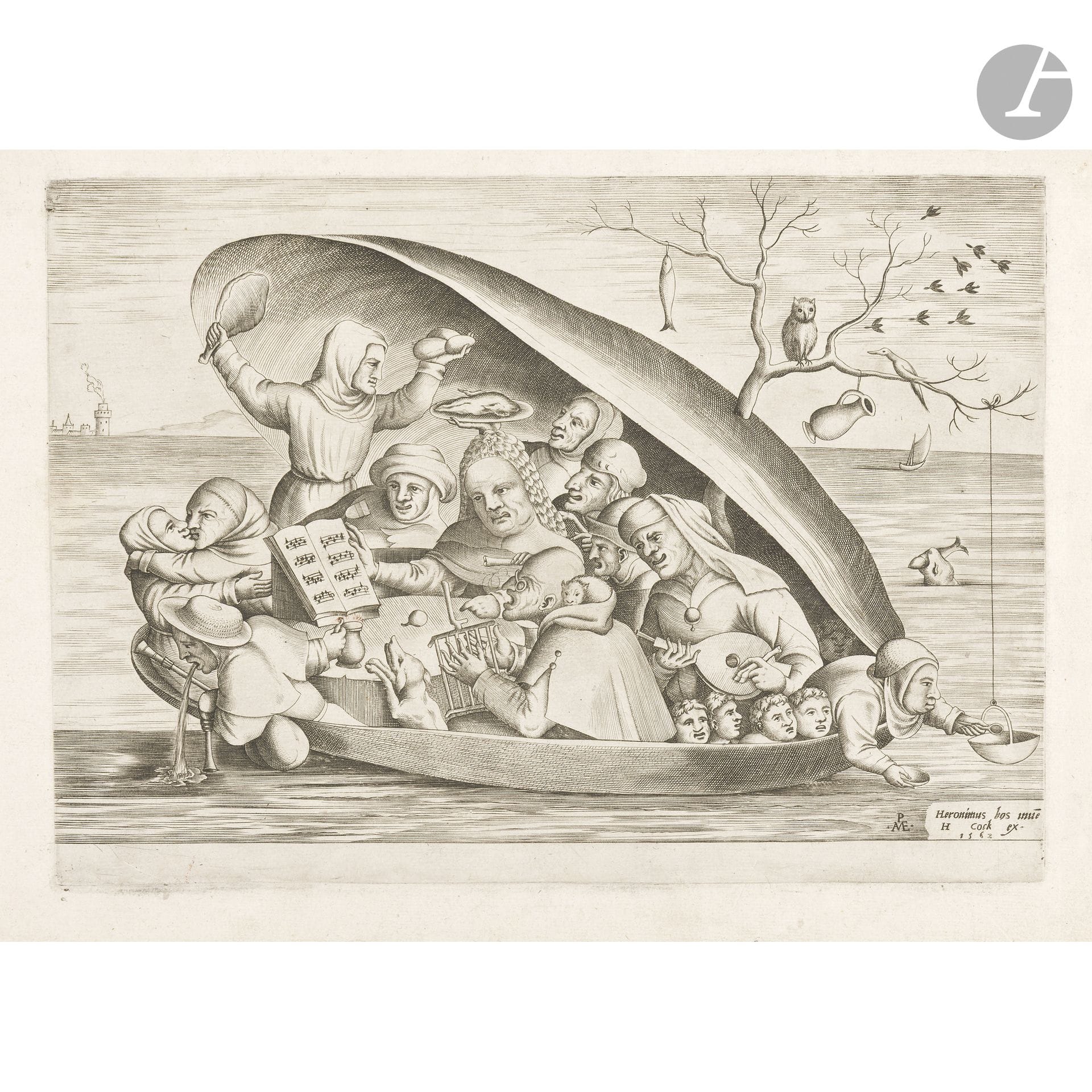
Pieter van der Heyden (1530–1572) The Mussel Boat, or Musicians in a Mussel Shell. 1562. Engraving after a follower of Hieronymus Bosch. 283 x 207 [316 x 233 mm]. Hollstein (Bosch) 27; Hollstein (Heyden) 51; Hollstein (Cock) 140. A very fine print on thin laid paper. Narrow margins. AABM stamp (Lugt 3075). Reproduced in J. van der Stock, ed., Hieronymus Cock; Renaissance Engraving (exhibition at the Royal Library of Belgium, Brussels, and at the Custodia Foundation, Frits Lugt Collection), Paris, Brussels, Fonds Mercator, 2013, p. 251, no. 63 b. This satirical engraving, published by the publisher and dealer Hieronymus Cock in Antwerp, was created against the backdrop of the Protestant Reformation. The makeshift ship echoes *The Ship of Fools*, a work by Sebastiaan Brant (1493) that was highly popular and influential. It embodies the medieval metaphor denouncing a humanity adrift morally, having forgotten the path to salvation. The open mussel shell in the middle of the sea symbolizes human fragility and the wandering of the soul in the face of the temptation of sin. The musicians and singers do not embody heavenly harmony, but rather diabolical clamor, lust, and frivolous distraction that lead people away from God. The monk kissing a nun directly denounces the hypocrisy and moral corruption of the clergy of the time. The bagpiper vomiting into the water illustrates carnal debauchery and the madness leading to ruin. The use of household utensils as musical instruments expresses total disorder and the reversal of Christian values. The presence of the owl perched atop the branch reinforces this idea of vice, representing here spiritual blindness and the forces of darkness at work within this dissolute gathering.
Estimate
€10,000 - €12,000
Buyer's premium
31.8%
Pieter van der Heyden (1530–1572)
The Mussel Boat, or Musicians in a Mussel Shell. 1562. Engraving after a follower of Hieronymus Bosch. 283 x 207 [316 x 233 mm]. Hollstein (Bosch) 27; Hollstein (Heyden) 51; Hollstein (Cock) 140. A very fine print on thin laid paper. Narrow margins. AABM stamp (Lugt 3075). Reproduced in J. van der Stock, ed., Hieronymus Cock; Renaissance Engraving (exhibition at the Royal Library of Belgium, Brussels, and at the Custodia Foundation, Frits Lugt Collection), Paris, Brussels, Fonds Mercator, 2013, p. 251, no. 63 b.
This satirical engraving, published by the publisher and dealer Hieronymus Cock in Antwerp, was created against the backdrop of the Protestant Reformation. The makeshift ship echoes *The Ship of Fools*, a work by Sebastiaan Brant (1493) that was highly popular and influential. It embodies the medieval metaphor denouncing a humanity adrift morally, having forgotten the path to salvation. The open mussel shell in the middle of the sea symbolizes human fragility and the wandering of the soul in the face of the temptation of sin. The musicians and singers do not embody heavenly harmony, but rather diabolical clamor, lust, and frivolous distraction that lead people away from God. The monk kissing a nun directly denounces the hypocrisy and moral corruption of the clergy of the time. The bagpiper vomiting into the water illustrates carnal debauchery and the madness leading to ruin. The use of household utensils as musical instruments expresses total disorder and the reversal of Christian values. The presence of the owl perched atop the branch reinforces this idea of vice, representing here spiritual blindness and the forces of darkness at work within this dissolute gathering.
Sale
Tuesday 24 November・14:00 (Europe/Paris)
Sale location coming soon
3, rue Favart
75002 Paris