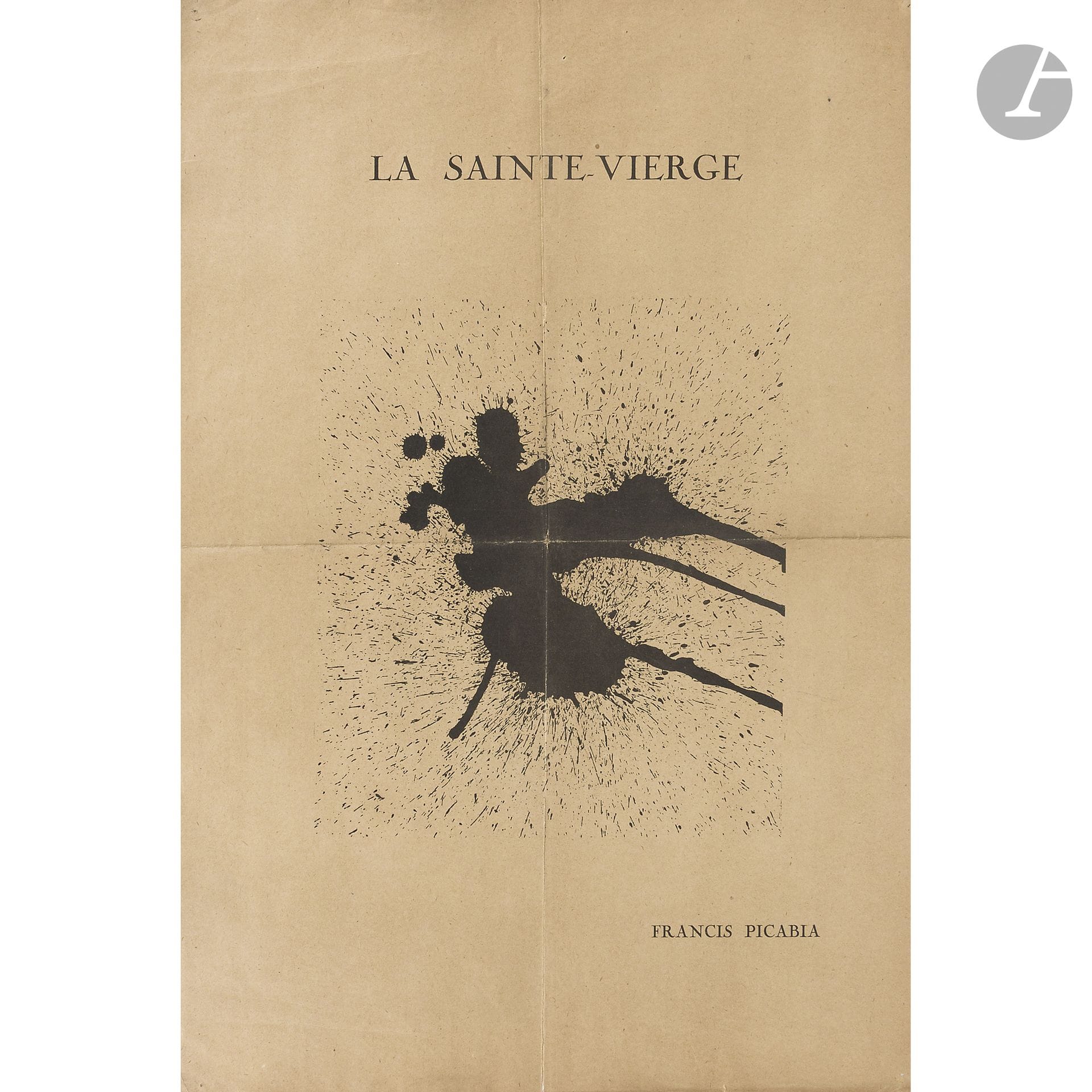
[MAGAZINE]. 391. Barcelona, Paris, February 10, 1917–November 1924. — 5 issues (out of 19), folio. Loose sheets. A rare set of 5 issues (one of which is incomplete) of this famous Dada magazine published under the sole direction of Francis Picabia. The complete collection consists of 19 issues published irregularly in Barcelona, New York, Zurich, or Paris from January 1917 to November 1924. Includes: - No. 2. Barcelona, February 10, 1917, 2 ff.: texts by Francis Picabia (“Convulsions frivoles”), Max Jacob (“Atlantide”), and Max Goth (“Black and White” and “D’un certain esprit…”). Illustrations by Francis Picabia (“Peigne”), Otho Lloyd, and Olga Sackaroff. Print run of 500 copies (No. 271). Traces of creases; otherwise, a well-preserved copy. - No. 10. Paris, December 1919, 2 ff.: texts by Francis Picabia, Guillaume Apollinaire, Tristan Tzara, Georges Ribemont-Dessaignes, Gabrielle Buffet, Albert Gleizes, etc. Illustration by Jean Arp. Fold marks and a few tears. - No. 14. Paris, November 1920, 3 ff. out of 4: texts by Tristan Tzara, Serner, Francis Picabia, Jean Cocteau, Ribemont-Dessaignes, Paul Éluard, etc. Illustrations by Picabia and Charchoune. Incomplete copy; the last leaf is missing. Creases and a few tears. - No. 15. Paris, July 10, 1921. Le Pilhaou-Thibaou. (8 ff.). Stapled. A very rare and unique supplement to the famous magazine, unnumbered but constituting issue No. 15 of the series. It was produced by Picabia to fuel the controversy between him and André Breton. In addition to Picabia, who also signed under the pseudonym “Funny Guy,” contributors included Érik Satie, Clément Pansaers, Jean Cocteau, Marcel Duchamp, Paul Dermée, Pierre de Massot, and others. The drawing on the last page is attributed to Picabia. A very well-preserved copy. - No. 19, November 1924, 2 ff.: The final issue of the Dada magazine. It includes a text titled “Opinions and Portraits,” a diatribe against an article by Maurice Martin du Gard, signed by Francis Picabia, who refers to himself as: “Director of André Breton’s Surrealism.” It also includes two texts by E. L. T. Mesens and René Magritte, respectively, as well as a large advertisement for Picabia’s ballet titled *Relâche*. The front page is illustrated with a light green overprint portrait identified by Picabia as that of Marcel Duchamp. It is, in fact, a portrait of the boxer Georges Carpentier. Creases, but otherwise a well-preserved copy. Included is the large insert featuring Picabia’s drawing titled “La Sainte Vierge,” which usually accompanies issue No. 12 from March 1920. The copy is torn along the folds but has no missing pages.
Estimate
€2,000 - €3,000
Buyer's premium
28.1%
[MAGAZINE].
391.
Barcelona, Paris, February 10, 1917–November 1924. — 5 issues (out of 19), folio. Loose sheets.
A rare set of 5 issues (one of which is incomplete) of this famous Dada magazine published under the sole direction of Francis Picabia. The complete collection consists of 19 issues published irregularly in Barcelona, New York, Zurich, or Paris from January 1917 to November 1924.
Includes:
- No. 2. Barcelona, February 10, 1917, 2 ff.: texts by Francis Picabia (“Convulsions frivoles”), Max Jacob (“Atlantide”), and Max Goth (“Black and White” and “D’un certain esprit…”). Illustrations by Francis Picabia (“Peigne”), Otho Lloyd, and Olga Sackaroff.
Print run of 500 copies (No. 271).
Traces of creases; otherwise, a well-preserved copy.
- No. 10. Paris, December 1919, 2 ff.: texts by Francis Picabia, Guillaume Apollinaire, Tristan Tzara, Georges Ribemont-Dessaignes, Gabrielle Buffet, Albert Gleizes, etc. Illustration by Jean Arp.
Fold marks and a few tears.
- No. 14. Paris, November 1920, 3 ff. out of 4: texts by Tristan Tzara, Serner, Francis Picabia, Jean Cocteau, Ribemont-Dessaignes, Paul Éluard, etc. Illustrations by Picabia and Charchoune.
Incomplete copy; the last leaf is missing. Creases and a few tears.
- No. 15. Paris, July 10, 1921. Le Pilhaou-Thibaou. (8 ff.). Stapled.
A very rare and unique supplement to the famous magazine, unnumbered but constituting issue No. 15 of the series. It was produced by Picabia to fuel the controversy between him and André Breton.
In addition to Picabia, who also signed under the pseudonym “Funny Guy,” contributors included Érik Satie, Clément Pansaers, Jean Cocteau, Marcel Duchamp, Paul Dermée, Pierre de Massot, and others. The drawing on the last page is attributed to Picabia.
A very well-preserved copy.
- No. 19, November 1924, 2 ff.: The final issue of the Dada magazine. It includes a text titled “Opinions and Portraits,” a diatribe against an article by Maurice Martin du Gard, signed by Francis Picabia, who refers to himself as: “Director of André Breton’s Surrealism.” It also includes two texts by E. L. T. Mesens and René Magritte, respectively, as well as a large advertisement for Picabia’s ballet titled *Relâche*.
The front page is illustrated with a light green overprint portrait identified by Picabia as that of Marcel Duchamp. It is, in fact, a portrait of the boxer Georges Carpentier.
Creases, but otherwise a well-preserved copy.
Included is the large insert featuring Picabia’s drawing titled “La Sainte Vierge,” which usually accompanies issue No. 12 from March 1920.
The copy is torn along the folds but has no missing pages.
Sale
Wednesday 25 November・14:00 (Europe/Paris)
Sale location coming soon
3, rue Favart
75002 Paris