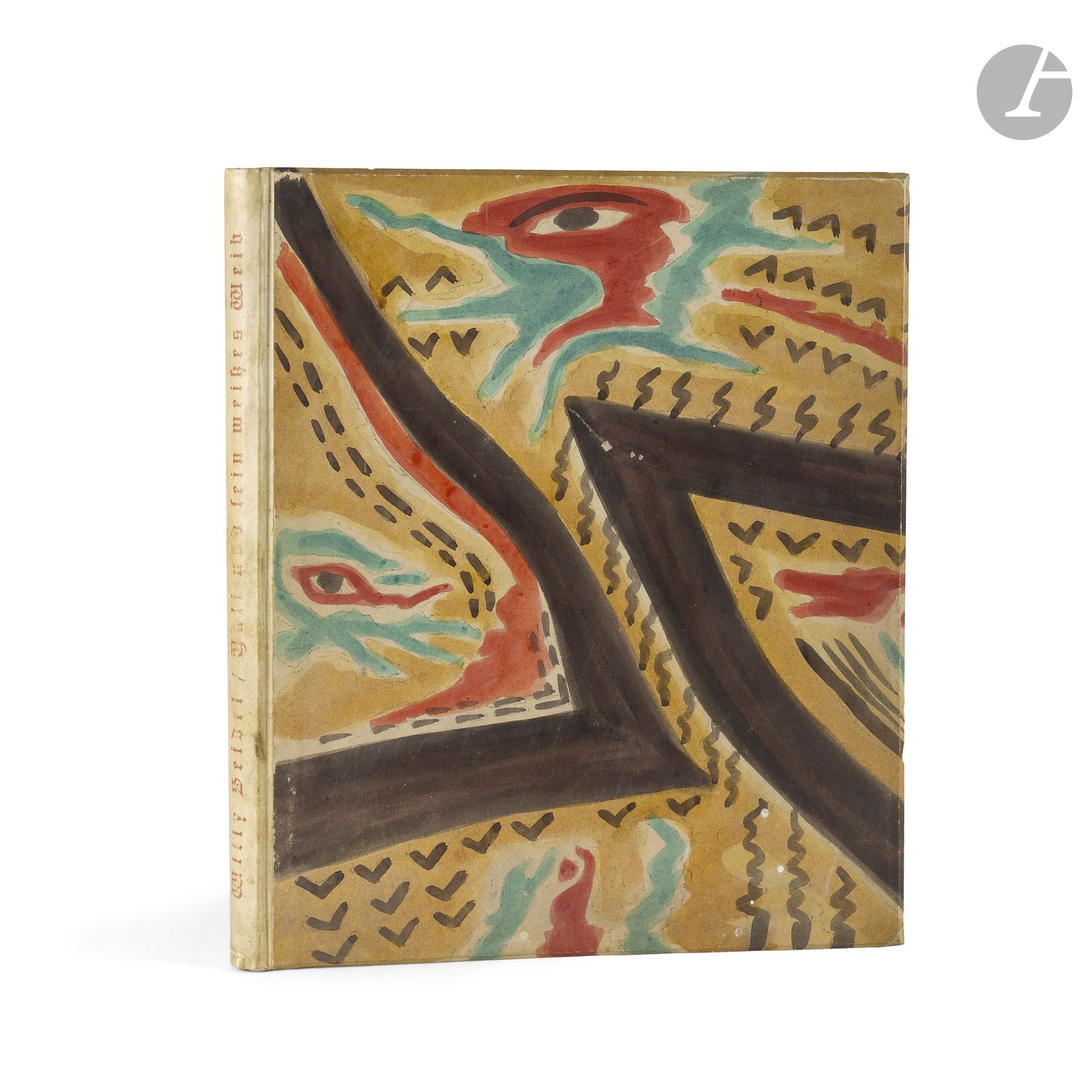
PECHSTEIN (Max) - SEIDEL (Willy). Yali and His White Wife. Berlin: Fritz Gurlitt, [1923]. — Folio, 350 x 290: frontispiece, (2 ff.), 27 pp., (2 ff., last page blank), 7 plates. Cardboard binding with a smooth white parchment spine and small corners, beveled covers decorated with paper reproducing a painted design, untrimmed (publisher’s binding). A beautiful edition printed in a run of 220 copies on rag paper, illustrated with 8 out-of-text etchings and one lithograph in the text (a large ornate initial) by the German painter and engraver Max PECHSTEIN (1881–1955). “Yali und sein weißes Weib (Yali and His White Wife) is a fantastical tale featuring an innocent young European woman in a distant, exotic land. She was still just a baby when her ship ran aground off the coast of Tierra del Fuego, at the southernmost tip of South America, and she was the only one to escape the massacre perpetrated by the Ona tribe, who raised her as one of their own. Pechstein’s eight illustrations set the story in an undefined tropical paradise, populated by palm and coconut trees, where naked characters are covered only occasionally by loincloths or seashells. Although Seidel’s novel is ostensibly set in South America, Pechstein drew inspiration from the Palau Islands in the South Pacific, which he had visited in 1914” (MoMA website). Chapel edition, unnumbered and unsigned. Stains on the board cover. Foxing spots.
Estimate
€800 - €1,200
Buyer's premium
28.1%
PECHSTEIN (Max) - SEIDEL (Willy).
Yali and His White Wife.
Berlin: Fritz Gurlitt, [1923]. — Folio, 350 x 290: frontispiece, (2 ff.), 27 pp., (2 ff., last page blank), 7 plates. Cardboard binding with a smooth white parchment spine and small corners, beveled covers decorated with paper reproducing a painted design, untrimmed (publisher’s binding).
A beautiful edition printed in a run of 220 copies on rag paper, illustrated with 8 out-of-text etchings and one lithograph in the text (a large ornate initial) by the German painter and engraver Max PECHSTEIN (1881–1955).
“Yali und sein weißes Weib (Yali and His White Wife) is a fantastical tale featuring an innocent young European woman in a distant, exotic land. She was still just a baby when her ship ran aground off the coast of Tierra del Fuego, at the southernmost tip of South America, and she was the only one to escape the massacre perpetrated by the Ona tribe, who raised her as one of their own. Pechstein’s eight illustrations set the story in an undefined tropical paradise, populated by palm and coconut trees, where naked characters are covered only occasionally by loincloths or seashells. Although Seidel’s novel is ostensibly set in South America, Pechstein drew inspiration from the Palau Islands in the South Pacific, which he had visited in 1914” (MoMA website).
Chapel edition, unnumbered and unsigned.
Stains on the board cover. Foxing spots.
Sale
Wednesday 25 November・14:00 (Europe/Paris)
Sale location coming soon
3, rue Favart
75002 Paris