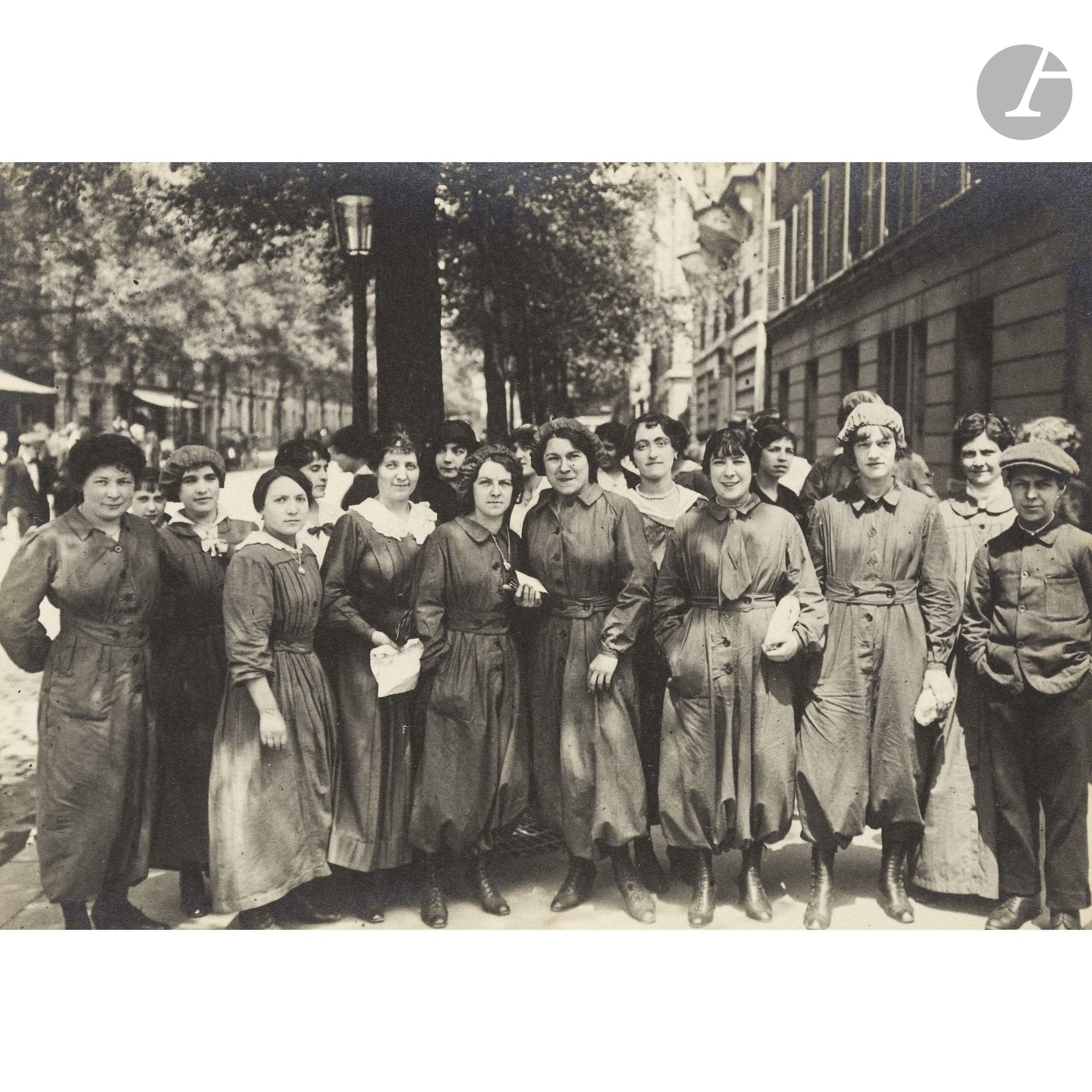
Jacques Moreau (1887–c. 1970) – Charles Lansiaux (1855–1939) Paris during World War I, 1914–1918. General mobilization order, August 2, 1914. Arrival of Marshal John Denton Pinkstone French at the Gare du Nord. Soup being served outdoors. Crowd in front of the Bank of France. Maggi stores looted and ransacked. Belgian armored vehicles. Orsay Station. Departures by train. Bombed buildings. The roof of Notre-Dame de Paris bombed, October 11, 1914. The Louvre department stores converted into a military hospital. Indian soldiers. Ambulance barges. Cemeteries. Fortifications. Barricades. Arrival of General Ricciotti Garibaldi. Military parades. Politicians and officials. War trophies on display at the Hôtel des Invalides. Funerals. Award ceremonies. Trams and omnibuses. German shells. Public notices (prefectural decrees, appeals to the public, posters). Military ships at the Alexandre III Bridge. Downed German aircraft. Explosion at the Louis Billant factory. Allied conference at the Ministry of Foreign Affairs. Funeral of General Gallieni. Daily life of Parisians during the war. Accident at the Renault factory, June 13, 1917. General Grossetti’s funeral. Paris under bombardment. Bombing of the Saint-Gervais Church, March 29, 1918. Protection of historic monuments. Military parades following the victory. Armistice of November 11, 1918. President Wilson in Paris, December 14–15, 1918. Two (2) oblong folio albums, bound in brown half-maroquin with green percaline covers, containing 220 and 216 period silver gelatin prints mounted on cardboard, respectively. Average size of the prints: 11.5 x 16.5 cm Bibliography: Béatrice Fontanel, Daniel Wolfromm, 1914–1918. We Were Men. Jacques Moreau, Paris, Éditions de la Martinière, 2004.
Estimate
€1,200 - €1,800
Buyer's premium
31.8%
Jacques Moreau (1887–c. 1970) – Charles Lansiaux (1855–1939)
Paris during World War I, 1914–1918.
General mobilization order, August 2, 1914. Arrival of Marshal John Denton Pinkstone French at the Gare du Nord. Soup being served outdoors. Crowd in front of the Bank of France. Maggi stores looted and ransacked. Belgian armored vehicles. Orsay Station. Departures by train. Bombed buildings. The roof of Notre-Dame de Paris bombed, October 11, 1914. The Louvre department stores converted into a military hospital. Indian soldiers. Ambulance barges. Cemeteries. Fortifications. Barricades. Arrival of General Ricciotti Garibaldi. Military parades. Politicians and officials. War trophies on display at the Hôtel des Invalides. Funerals. Award ceremonies. Trams and omnibuses. German shells. Public notices (prefectural decrees, appeals to the public, posters). Military ships at the Alexandre III Bridge. Downed German aircraft. Explosion at the Louis Billant factory. Allied conference at the Ministry of Foreign Affairs. Funeral of General Gallieni. Daily life of Parisians during the war. Accident at the Renault factory, June 13, 1917. General Grossetti’s funeral. Paris under bombardment. Bombing of the Saint-Gervais Church, March 29, 1918. Protection of historic monuments. Military parades following the victory. Armistice of November 11, 1918. President Wilson in Paris, December 14–15, 1918.
Two (2) oblong folio albums, bound in brown half-maroquin with green percaline covers, containing 220 and 216 period silver gelatin prints mounted on cardboard, respectively.
Average size of the prints: 11.5 x 16.5 cm
Bibliography:
Béatrice Fontanel, Daniel Wolfromm, 1914–1918. We Were Men. Jacques Moreau, Paris, Éditions de la Martinière, 2004.
Sale
Friday 13 November・14:00 (Europe/Paris)
Sale location coming soon
3, rue Favart
75002 Paris