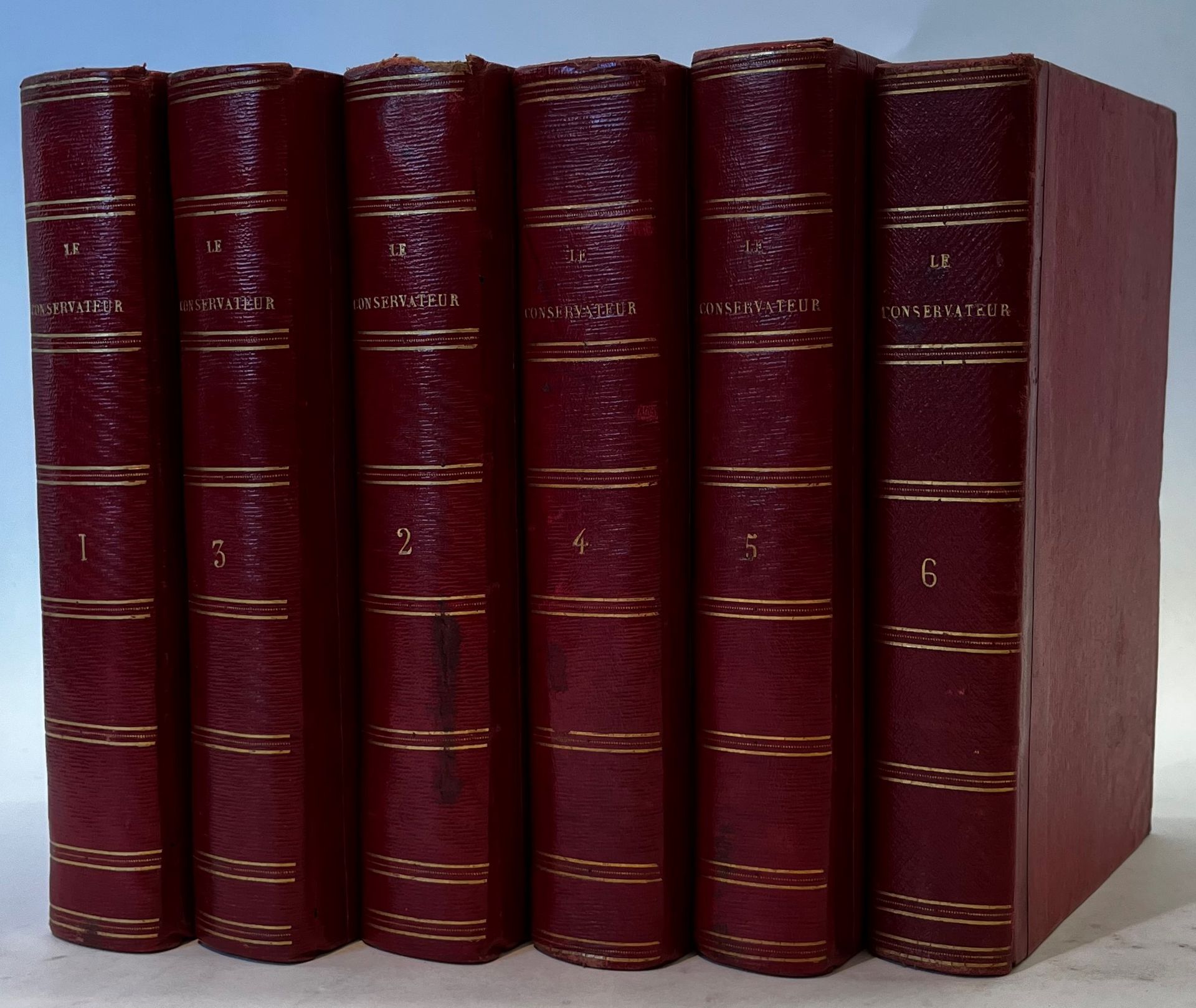
THE CONSERVATIVE The King, the Charter and the honest people No. 1, October 1818-No. 78, March 1820. Paris, At the office of the Conservative, at Le Normant Fils, Editor, Director : Chateaubriand. Texts by Chateaubriand (who signed "Le Vicomte de Chateaubriand", "Le Conservateur", or with the single initial "Z"), the Viscount de Bonald, Marie-Barthélémy de Castelbajac, Custine, Joseph Fiévée, Lamartine, Lamennais, O'Mahony, A. Martainville, Jules de Polignac, de Villèle, etc. Complete collection. 78 issues in 6 vol. in-8 bound (period binding, half red long-grained basane, fillets on the spine, very small difference in binding in Volume VI). Ultra-royalist journal, created in opposition to La Minerve, a liberal royalist organ directed by Benjamin Constant. Le Conservateur, which ceased to appear when censorship was re-established following the assassination of the Duke of Berry, is defined by Hatin (pp. 338-340) as follows: "It is in this justly famous collection, an open house for all the regrets, all the resentments, all the exaggerations of the ultras, that one must above all look for the royalist policy during the 18 months that it lived.
Estimate
€800 - €1,000
Result
Not sold
Buyer's premium
25%
THE CONSERVATIVE
The King, the Charter and the honest people
No. 1, October 1818-No. 78, March 1820. Paris, At the office of the Conservative, at Le Normant Fils, Editor, Director : Chateaubriand. Texts by Chateaubriand (who signed "Le Vicomte de Chateaubriand", "Le Conservateur", or with the single initial "Z"), the Viscount de Bonald, Marie-Barthélémy de Castelbajac, Custine, Joseph Fiévée, Lamartine, Lamennais, O'Mahony, A. Martainville, Jules de Polignac, de Villèle, etc. Complete collection. 78 issues in 6 vol. in-8 bound (period binding, half red long-grained basane, fillets on the spine, very small difference in binding in Volume VI).
Ultra-royalist journal, created in opposition to La Minerve, a liberal royalist organ directed by Benjamin Constant. Le Conservateur, which ceased to appear when censorship was re-established following the assassination of the Duke of Berry, is defined by Hatin (pp. 338-340) as follows: "It is in this justly famous collection, an open house for all the regrets, all the resentments, all the exaggerations of the ultras, that one must above all look for the royalist policy during the 18 months that it lived.
Sale
Wednesday 1 March 2023・14:00 (Europe/Paris)
Sale location coming soon
3, rue Favart
75002 Paris